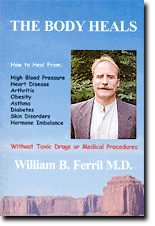
The Body Heals, written by Dr. William Ferril, hits you where it hurts ... your belly. You'd better read it fast, because if what he says is true, the negative effects to your body brought on by living badly begin to show themselves when you are around 40-to-50 years old. The good news is, it may not be too late: Cellular change is possible, but the longer you wait, the lower your chance for true longevity.
Dr. Ferril's primary goal is to provide usable information about improving health through basic nutritional approaches, specifically by eating real, whole foods; exercising; meditating; and drinking plenty of water. He believes the overindulgence of processed foods, high in sodium and low in potassium and magnesium, eventually leads to nutritional deficiency and disease. Dr. Ferril's ideas are not new, but in our fast-paced world, they need to be revisited. He discusses specific approaches to combating obesity; diabetes; high cholesterol; arthritis; and high blood pressure; along with methods for improving the function of virtually every organ system in the body.
A proponent of the high-protein/fat, low-carbohydrate diet, Dr. Ferril appears to follow concepts similar to Dr. Atkins. Each chapter contains detailed chemical and hormonal interactions as they relate to the "food" we consume. Unfortunately, there are no graphs, equations, tables, molecular drawings or pictorial explanations to demonstrate these various chemical and hormonal reactions.
Dr. Ferril is extremely aligned with alternative medical practitioners, and is clear on the importance of restoring the rhythmic energy (innate) that flows through us all. He is not particularly trusting of the traditional medical establishment, and offers interesting opinions regarding medical concepts throughout the book.
The final chapters illustrate specific blood and urine tests not typically ordered by your average MD during an examination. Finally, the appendix includes a brief review involving a few natural disciplines and the philosophies that drive them.
Dr. Kintish's rating:
9.5 (on a scale of 1-10, 10 being best)
If you have authored, published or produced a book, audio or video package that is chiropractic-oriented, educational, nonpromotional and written or produced in a professional manner, and would like it reviewed in Dynamic Chiropractic, please send two copies of the book, video or audiocassette to:
Dynamic Chiropractic P.O. Box 4109 Huntington Beach, California 92605-4109
While cervical disc pathology can unquestionably produce radiculopathy, many patients presenting with arm pain, paresthesia or perceived weakness do not exhibit the clinical behavior of true nerve-root compromise. In these cases, failure to differentiate the primary pain generator may lead to unnecessary spinal injections, nerve ablation procedures or surgical consultation despite limited likelihood of benefit.
The New Jersey Board of Chiropractic Examiners has made a precedential decision, concurring with the Association of New Jersey Chiropractors' (ANJC) position paper on chiropractic X-ray guidelines. In plain terms, the board ruled, consistent with the ANJC position, that insurance companies cannot use medical X-ray rules or recommendations, like those written by the American College of Radiology (ACR), to decide whether a chiropractor's X-ray was necessary.
For decades, chiropractors have been told the answer to more professional referrals is simple: educate medical doctors about chiropractic. There is some truth in that advice; but it is also incomplete. The modern challenge is not simply getting another healthcare professional to know that chiropractors exist. It is becoming the kind of clinician (and building the kind of professional relationship) that makes collaboration easy and sustainable.