A historic announcement and record-breaking attendance: just a few of the highlights from this year's The National by the Florida Chiropractic Association, which boasted more than 4,000 attendees and a 400-booth expo featuring 275 companies. Here's a brief synopsis of what took place in Orlando this year.
Event Highlights
The Foundation for Chiropractic Progress (F4CP) chose The National to announce (as reported in our October issue) that chiropractic will debut a 30-second television commercial during the 2020 Tokyo Summer Olympics. The commercial will air five times to U.S. viewers as part of the profession's 125th anniversary celebration next year, and is receiving substantial funding from the National Board of Chiropractic Examiners, among other supporters.
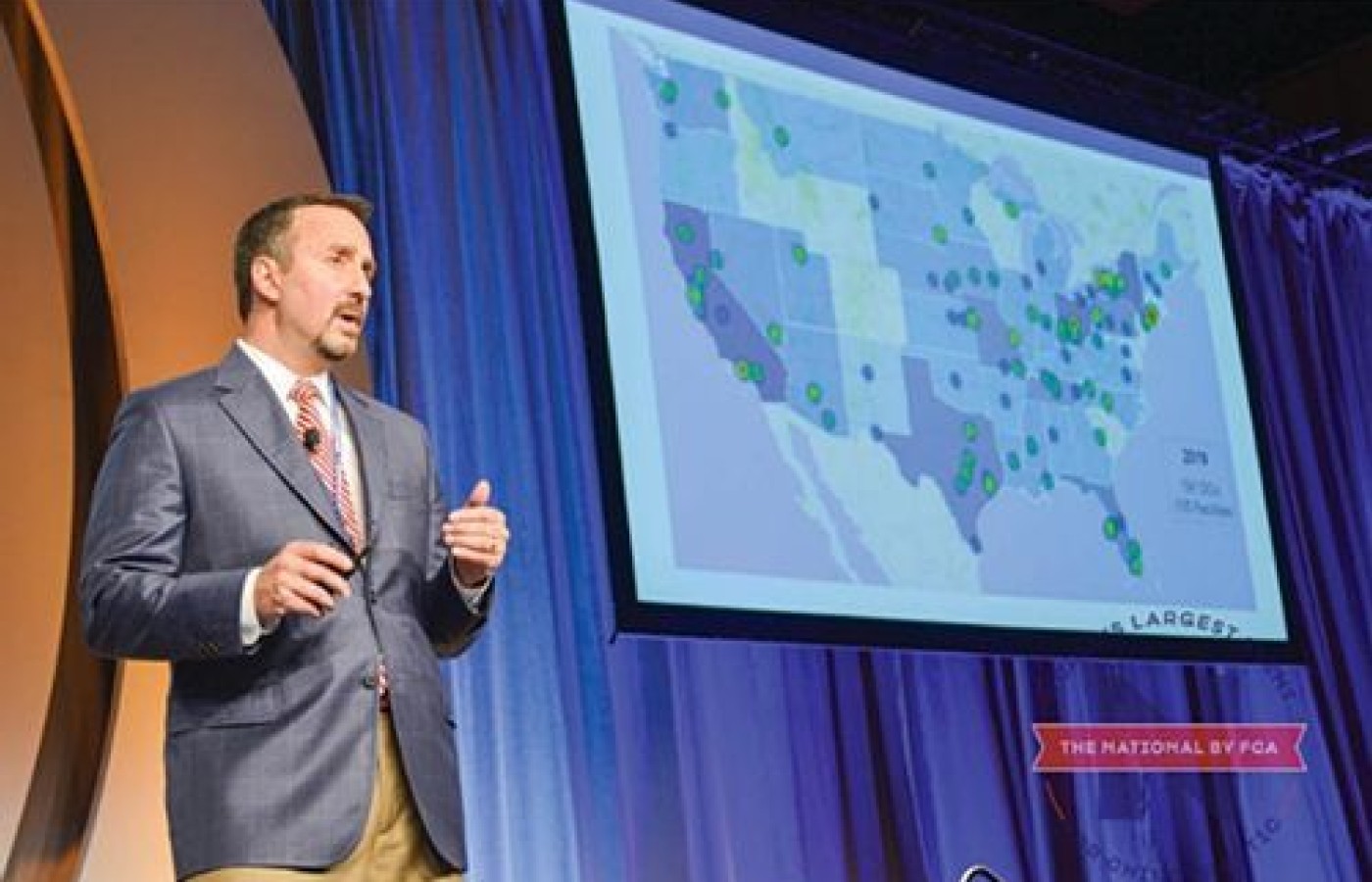
Dr. Anthony Lisi addressing thousands of attendees during a keynote panel, "A Military Panel Discus-sion of Chiropractic Treatment for the Veteran: Standard Procedures, Risks and Rewards."
International, national and state chiropractic organizations were well-represented at the event, including the World Federation of Chiropractic, Association of Chiropractic Colleges, American Chiropractic Association, Federation of Chiropractic Licensing Boards, Foundation for Chiropractic Progress, National Board of Chiropractic Examiners, Florida Board of Chiropractic Medicine and others.
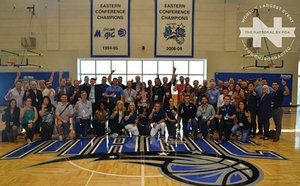
Attendees enjoying the expo and networking in between classes.
The FCA Board of Directors announced its DC of the Year (Dr. Jerry True); CA of the Year (Shelby Phenix); and LMT of the Year (Jane Kordish). Paul Lambert, JD, received the association's Impact Award.
ChiroHealthUSA awarded The Foxworth Family Chiropractic Scholarship in the amount of $15,000 to Robert J. Butler, a student at Palmer College of Chiropractic - West. Palmer West also receives $10,000. This is the largest achievement-based scholarship available to chiropractic students.
Doctors of Chiropractic: Sports Instructors, Drs. Sabrina Atkins, Michael Bagnell, Spencer Baron, Kathleen Baumgardner and Cindy M. Howard, Beth Rizer and Anne Sorrentino, educate attendees on "Integration of Chiropractic in the Athletic Training Room."
Three DC attendees received cash prizes totaling $10,000 at the President's Reception, and there were countless vendor giveaways during the expo including lasers, tables, mattresses and more.
Save the Date
Next year's The National by FCA is right around the corner! Visit www.TheNationalChiro.com for up-to-date information on the Aug. 27-30, 2020 event (once again at the Hyatt Regency Orlando), including scheduled speakers, program details and more.
While cervical disc pathology can unquestionably produce radiculopathy, many patients presenting with arm pain, paresthesia or perceived weakness do not exhibit the clinical behavior of true nerve-root compromise. In these cases, failure to differentiate the primary pain generator may lead to unnecessary spinal injections, nerve ablation procedures or surgical consultation despite limited likelihood of benefit.
The New Jersey Board of Chiropractic Examiners has made a precedential decision, concurring with the Association of New Jersey Chiropractors' (ANJC) position paper on chiropractic X-ray guidelines. In plain terms, the board ruled, consistent with the ANJC position, that insurance companies cannot use medical X-ray rules or recommendations, like those written by the American College of Radiology (ACR), to decide whether a chiropractor's X-ray was necessary.
For decades, chiropractors have been told the answer to more professional referrals is simple: educate medical doctors about chiropractic. There is some truth in that advice; but it is also incomplete. The modern challenge is not simply getting another healthcare professional to know that chiropractors exist. It is becoming the kind of clinician (and building the kind of professional relationship) that makes collaboration easy and sustainable.