Ask most chiropractors about their first few months of school and you’ll hear about the same gauntlet: the smell of the anatomy lab and months of being buried in the “ologies” of the basic sciences. It was a soul-crushing volume of memorization where we mastered the science of the human body; long before we were introduced to the person inhabiting it.
For most of us, the “doctor” part of the degree was a distant light at the end of a very long tunnel. You didn’t see a real patient until you had spent years staring at textbooks.
At the University of Pittsburgh, we decided to change that timeline. Because our program is housed within a research-intensive public university and affiliated with a large academic medical center, we are able to place students in clinical environments that most chiropractic programs cannot access.
Last fall, our inaugural cohort of chiropractic students started their training with something different: they were in real clinical environments starting week one. This wasn’t just “shadowing” at a local office. We placed them into rotations that included community chiropractic practices, physical therapy clinics, emergency medical service (EMS) ambulance ride-alongs, and hospital emergency departments (ED).
The results suggest we might underestimate what students are capable of early in their formation. When we read their reflections after these shifts, we didn’t just see excitement. We saw profound insights into how they were thinking about responsibility, patients, and their unique role in the healthcare delivery system.
Real Communication Over Rote Memorization
In the first semester, students are usually obsessed with the “what”– the nerve, the muscle or the biomechanical finding. Early clinical immersion forced them to look at the “how.”
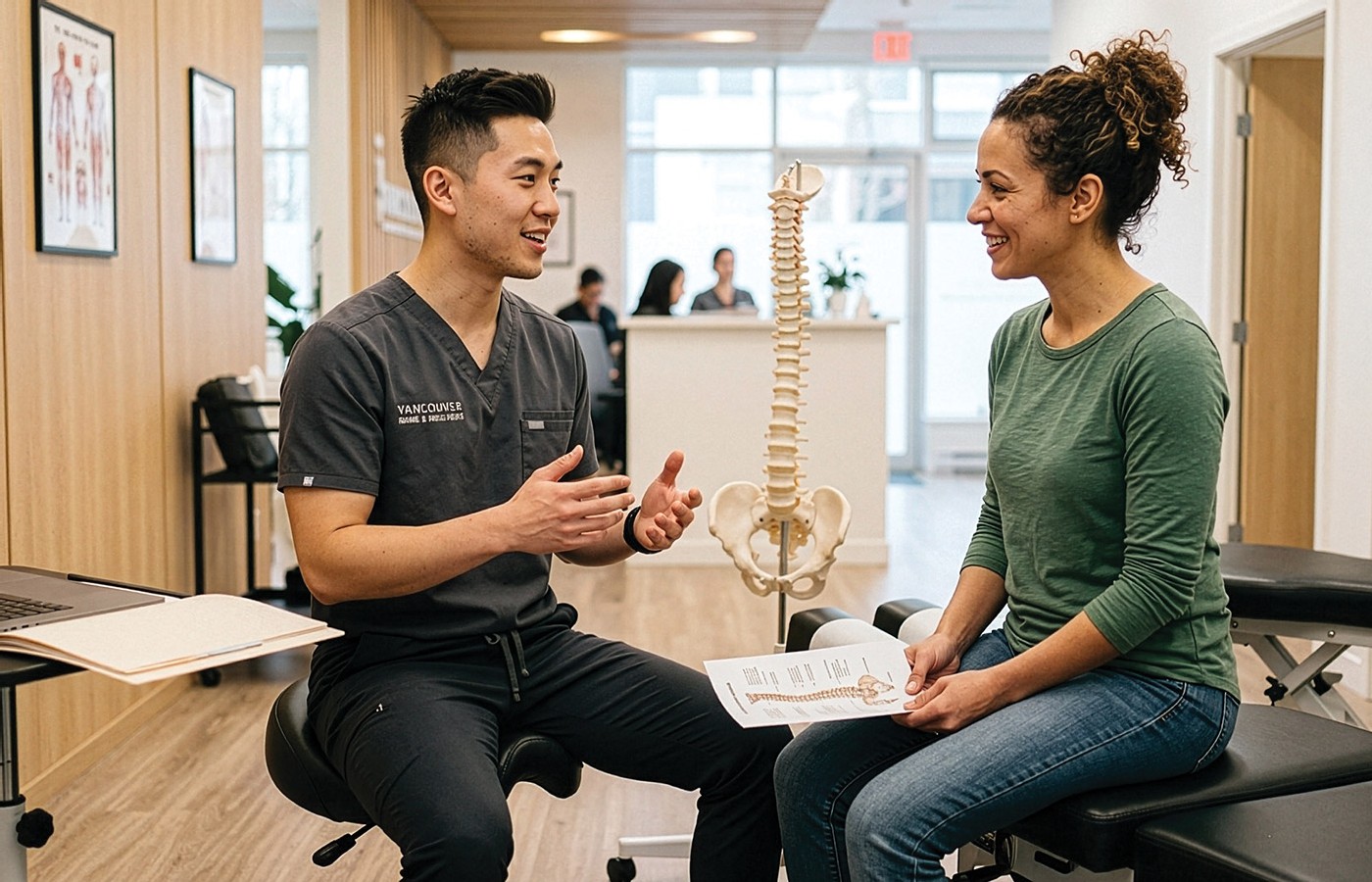
One student, after observing a veteran chiropractor, focused not on the adjustments, but on the dialogue: “I found it interesting how he explained the procedures ... in words the patients were able to understand.”
Another student was struck by a different kind of clinical skill: humility: “It was just nice to observe a doctor who put the patients’ needs and health over their ego.”
These students are realizing early that while they must know the sciences, their success depends on their ability to communicate with the person in front of them.
Learning Not to Panic
The most intense experiences happened in the ED and EMS ambulance shifts. These are high-stakes environments that most chiropractic students never see.
Our students witnessed the reality of acute care, including overdose resuscitations and pediatric emergencies. One student described watching a team handle a high-stress call:
“They were calm and careful even in an event that seemed stressful to me. I think I will replicate that same energy in stressful situations.”
This is the real value of early exposure. It’s about witnessing clinical composure modeled by mentors. By seeing a medical team handle a crisis in their first semester, the typical “nerves” of a patient intake become more manageable. They are beginning to appreciate the value of clear thinking and decisiveness in uncertain situations.
Seeing Where We Fit
Students also spent time in physical therapy clinics, seeing firsthand how different professions handle similar cases. Instead of seeing other providers as “competition,” they began to appreciate their unique chiropractic identity and the value they can bring within the larger system.
One student articulated this shift clearly: “I want to understand and appreciate the work that all rehabilitation specialties do ... so I can educate others on the role chiropractic practitioners have in those spaces.”
We did not expect to see this level of perspective emerge so consistently in first-term students. They are already beginning to see themselves as clinicians who can walk into a multidisciplinary room and speak with an MD or PT without feeling like an outsider.
Making the Science Matter
Early immersion also mitigated the “Why am I learning this?” problem. When you spend time on an EMS ambulance and see a patient in a diabetic crisis, your Thursday-morning biochemistry lecture suddenly feels like a survival guide rather than another “ology” to be memorized.
One student reflected after an EMS shift: “It reminded me to stay sharp in anatomy and metabolism, because anyone could walk into the chiropractor and suddenly need help.”
A Continuous Thread, Not a Phase
These early clinical experiences are not isolated events or “one-off” introductions; they are the first component of an experiential curriculum designed to deepen over time. As students progress, they will return to these and other clinical environments repeatedly.
The goal is for this hands-on learning to function as a continuous thread throughout their education rather than an isolated phase at the end of the program. Each time they step back into the clinic, they do so with greater knowledge and stronger skills, but with a foundation of professional responsibility that was laid in their very first month.
Why This Matters for the Profession
When we describe this model to practicing chiropractors, the reaction is almost always: “I wish I had that in school.”
Most of us had to learn how to talk to a nervous patient, how to navigate professional boundaries and how to stay calm during a difficult case only after we graduated. We are trying to bridge that gap. By grounding students in clinical reality from day one, we are helping them build the confidence and professionalism that usually take years to develop in the field.
A Request to Our Colleagues
As you talk to patients or young people curious about a chiropractic career, look for programs that don’t just keep them in a library and lab for years.
Our students aren’t just “getting through” school. They are being shaped by it from the first week. As one student wrote after watching a clinician take extra time with a patient: “This is something I hope to replicate in my future practice.”
If that is what a first-semester student is already saying, the future of our profession is in very good hands.