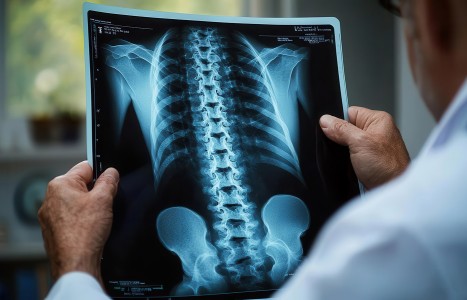
As chiropractors, most readers are aware of the 2014 American Heart Association study that found an “association” between cervical manipulative therapy (CMT) and cervical arterial dissections (CAD). However, although the study found an association between CMT and CAD, it did not find causation between the two. So, what is the difference between association and causation, and how can it be presented to laypersons who likely equate them?
Association vs. Causation
First, let’s look at what the AHA study actually concluded. The therapy studied was CMT, defined broadly to include manipulations of the neck (cervical spine) by any healthcare provider, including but not limited to chiropractors. The authors concluded that manipulating the neck has been associated with cervical dissection (which may lead to stroke). However, they emphasize in their conclusions that association does not necessarily equal causation.
The study highlights that there are multiple confounding factors which may break the causal link. First, patients who later develop arterial dissection often first present with neck pain and/or headache and then seek healthcare (either chiropractic or medical) in the days preceding the dissection-related stroke. This suggests reverse causation (i.e., the arterial disorder caused the neck pain and led to seeking medical care), rather than the neck manipulation causing the dissection.
The study further highlights that in many case-control and case-crossover studies, visits to chiropractors and primary care physicians (PCPs) showed similar associations with subsequent stroke / dissection in patients. This implies that the visit (to either provider) may reflect early symptoms of dissection, rather than the provider causing dissection.
Diagnostic Imaging Estimates
It is also important to note that diagnostic imaging such as MRI (especially with specific sequences) can help estimate when a stroke occurred, although it is not specific enough to precisely provide an exact date of occurrence.
MRI, interpreted by a qualified radiologist, can show characteristic tissue and signal changes that evolve over time, allowing the radiologist to estimate whether a stroke is acute, subacute or chronic. By comparing diffusion and T2/FLAIR changes, radiologists can estimate when the infarct occurred – often within a few days of accuracy.
The Ice Cream Analogy
That is all well and good, but how do you explain this lack of causation to a layperson such as a patient or, in the context of a medical malpractice claim, a jury of laypersons? In opening arguments as a medical malpractice defense attorney for over 25 years, I have utilized the following simple analogy that I have found to be quite effective. It goes like this.
Ladies and gentlemen of the jury, did you know there are published studies that find an association between eating ice cream and drowning? This is not just eating ice cream before swimming and getting a cramp. Rather, if the nationwide consumption of ice cream goes up each year, there is an associated increase in drowning deaths. Seems rather unlikely, right? The critical aspect is that the study found an “association” but not “causation” which are two distinct findings. Let’s drill down further on the study.
Upon further review, the study failed to account for outside confounding factors that were more likely the cause of the result. In this situation, when the temperature increases, people tend to eat more ice cream, as well as tend to swim more often. Thus, it is the confounding factor of overall increased temperature which was more likely the cause of increased drownings, not increased ice cream consumption itself. Without controlling for the “summer / swimming” confounder, one might see a correlation between ice cream and drowning, and mistakenly infer causation.
In this situation, while the plaintiff may have presented evidence of an “association” between CMT and CAD, they failed to establish “causation” due to multiple confounding factors, such as the patient already having a stroke in progress that caused them to see Dr. Smith in the first place. In a court of law, association is not enough to meet the burden of proof, and the plaintiff has the burden to establish causation to recover damages from the doctor. They have failed to do so here, warranting a verdict in favor of Dr. Smith.
Set the Record Straight
This simple analogy can be modified for use in practice if a patient asks about or has heard rumors of the association between CMT and CAD. Legal cases in the news and some anti-chiropractic groups have attempted to blur the lines between association and causation – it is up to you as the patient’s trusted healthcare provider to set the record straight.
Editor’s Note: This column by the National Association of Chiropractic Attorneys (NACA) features legal updates as they relate to chiropractors. For previous articles, visit the NACA online columnist page.