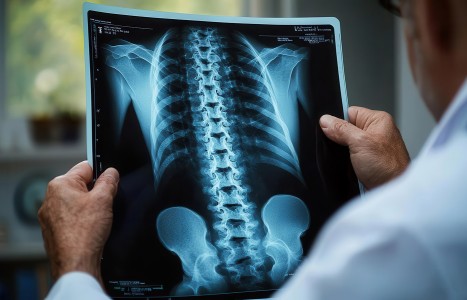
The geriatric curve – the progressive decline in our health, fitness, mental capacity, and overall constitution – graphically appears as a downward sloping line over time. It is a culmination of the effects of sarcopenia, postural deterioration, frailty, and chronic noncommunicable diseases that occur as we age.
While aging cannot be reversed, the goal is to reduce the negative slope or “square off” the curve, thus avoiding a steady decline in health.
By squaring the geriatric curve, the concept is not to live longer; it is to live better. It is to maintain an active, engaged life with a rapid decline at the end, regardless of how many years you live. While the concept of squaring of the curve seems novel to the medical community, it has been a mainstay of chiropractic since our inception. We have always known “chiropractic adds life to your years.”
For those of us who have been in practice long enough to age along with our patients, the pattern is readily apparent. Patients who come in for wellness visits, stay engaged and seek advice on healthy lifestyles, diet / nutrition, and exercise develop livegevity. They age better. A chiropractic lifestyle addresses all of these variables, squaring off the geriatric curve.
#1: Adjustments (of Course)
Regardless of the technique, CMT restores and maintains normal arthrokinematics. This reduces articular cartilage wear and tear, which in turn reduces degenerative joint changes. Additionally, normal joint mechanics enable better kinematics/movement, reducing the propensity of developing faulty movement patterns that result in pain, dysfunction, deterioration, and serial distortion throughout the body.
If you stack postural correction with your CMT, your adjustments set the stage to reduce the negative effects of gravity on posture. Gravity is not our friend: over time we will compress into weak and abnormal postures due to injuries, lifestyle, and genetic predisposition.
From rounded shoulders and knock knees to a wide-based gait and adult-onset scoliosis, the sooner patients learn to set their adjustments with exercises and auto correction, the stronger their posture will be over time.
Training patients in finding and maintaining sagittal- and frontal-plane alignment statically and dynamically is essential to prevent this aspect of the geriatric curve. Start patients on it early and reinforce it often.
#2: Diet / Nutrition
Although there are individual concerns for specific patient populations (e.g., celiac patients must avoid gluten), everyone can agree on a healthy diet: fresh fruits, vegetables, lean meat, unprocessed foods, whole grains. While this is a good place to start, to reduce your genetic expression of disease and square off the geriatric curve, an anti-inflammatory diet is optimal.
Food can increase or reduce systemic pro-inflammatory cytokines, and since most diseases are related to inflammation, an anti-inflammatory diet will reduce a patient’s individual genetic expression for disease. Again, flattening the geriatric curve.
An anti-inflammatory diet is a combination of foods high in omega-3 fatty acids and with a lower glycemic index and glycemic load. That translates to 5-7 servings of fresh fruits and vegetables/day, poultry, fish, occasional grass-fed beef, and nuts.
Good fats include extra-virgin olive, avocado, macadamia, and coconut oils. Vegetable, seed and hydrogenated oils are to be avoided, along with grains. Eggs high in omega-3 fatty acids and dairy from grass fed/finished cows in condiment-sized portions are allowed.
Note that portion size is still important – a large meal of anti-inflammatory foods can also create a high glycemic load and drive inflammation. Keep portion sizes appropriate. (For cooking tips and recipes on an anti-inflammatory diet check out my YouTube channel, DrDeFabio.)
Since sarcopenia is an age-related phenomenon, it is essential to get enough protein. For the over-55 crowd a good recommendation is at least 0.75g/kg body weight depending on exercise level.
Remember that digestive enzymes also decrease with age, so a digestive enzyme may be needed to ensure absorption of all nutrients.
Supplements can be beneficial once an anti-inflammatory diet is in place. Start with the basics: a multiple, vitamin D, omega-3, magnesium, probiotic. When considering supplements feel free to include those for individual health issues or genetic/familial trends once a solid anti-inflammatory diet is in place.
#3: Rest / Sleep
Rest, recovery and sleep are synonymous with health and integral to lifegevity. However, rest does not mean sitting on the couch or playing mahjong all day. Rest is a change from everyday activities. Changing up activities stimulates the body and mind. Recovery in this case is from physical activity. Whether it is house chores or sports, recovery is important to prepare for the next activity.
Recovery can be passive, as in stretching or reclining; or it can be active, as in walking or a light swim. The intent of recovery is to flush our metabolic end products from physical activity. Caveat: If you choose passive rest after activity, be sure you maintain good joint alignment! Cooling down in poor alignment will train your body to stay in that position.
Sleep is essential to health. Sleep quality can be easily mapped with wearable sensors at home. The bottom line: get enough sleep, (6-8 hours) and expect to wake up refreshed, ready to start your day. The basics of sleep hygiene include a cool, quiet room, bedtime ritual, no electronic devices an hour before bed, and no meals before bed – a good place to start.
Parallel to adequate rest and sleep is calming the brain. Reading, meditation and prayer all stimulate a parasympathetic state conducive to recovery from the caffeinated, fast-paced, got-to-get-it-done-now tempo of our lives.
#4: Mental Agility
Age-related mental decline is part of the geriatric curve. The good news is you can “exercise” your brain to help it stay sharp. Learning a new language or musical instrument is an example. Staying engaged socially is essential (and yes, you can play mahjong, or bridge or do crossword puzzles). The key is a new activity on top of ADLs. (By the way, Alzheimer’s has been related to inflammation, another good reason to stay on a strict anti-inflammatory diet.)
Cardiovascular activity and antioxidants are both important for brain health. In fact, the Cleveland Clinic recommends one hour daily of any exercise (cardio, flexibility or strength) for brain health. As it is becoming apparent, squaring the geriatric cure is multifactorial and the components are synergistic: It works best when you do them all.
#5: Exercise
Cardiovascular disease is the leading cause of fatality in the U.S.; therefore, aerobic exercise is a must for everyone to square off the curve. The American Heart Association recommends at least 120 min/week of aerobic activity. Other activities (resistance, flexibility, balance and agility) also need to be pursued as we age.
Resistance training maintains muscle and bone mass. Studies have shown that men who perform consistent resistance exercise live longer, and grip strength has also been related to longevity. Together this supports using free weights for resistance training to maintain grip strength while working prime movers.
Flexibility training includes stretching, foam rollers, yoga, and Pilates. In the geriatric curve ROM decreases globally and segmentally. Maintaining the elastic properties of soft tissues helps maintain efficient motion.
However, the movements you train with any exercise will be remembered when performing ADLs. Therefore, while exercising it is imperative to teach and groove sagittal- and frontal-plane alignment. The ratio of aerobic, flexibility and resistance training required is patient specific based on individual morphology and history.
Chiropractic care is the front-line defense in squaring off the geriatric curve. It is wholistic and based on a vitalistic mechanism of healing that enables the body to age better with livegevity.
Author’s Note: The next article in this two-part series outlines seven daily home exercises for strength, balance and agility to square off the geriatric curve.
Resources
- Izquierdo M, et al. Global consensus on optimal exercise recommendations for enhancing healthy longevity in older adults (ICFSR). J Nut Hlth, Aging, 2025 Jan;29(1):100401.
- Thornton JS, Morley WM, Sinha SK. Move more, age well: prescribing physical activity for older adults. CMAJ, 2025 Jan 27;197:E59-67.
- Bohannon RW. Grip strength: an indispensable biomarker for older adults. Clin Interv Aging, 2019 Oct 1;14:1681-1691.