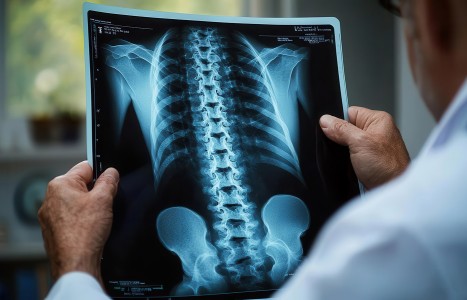
A 46-year-old male presented to our clinic with a seven-year history of recurrent low back pain with sciatica, rated 8/10 on the numeric pain scale. His symptoms radiated down the posterior thigh and occasionally into the calf. He reported stiffness and discomfort that worsened with prolonged sitting both at his desk job and during evening television time.
The patient had seen multiple chiropractors over the years. In every case, spinal manipulation and other passive treatments would bring gradual symptom relief over 2-3 months. However, within another 3-6 months, the symptoms would return.
None of the previous providers had assessed lumbar muscle endurance, asked about total daily sitting time or provided any active coaching. Two gave him generalized exercise printouts without any follow-up or instruction. The rest focused solely on passive care.
Frustrated – and now considering a spinal injection and possibly surgery if that failed, he came to our office seeking a different approach.
Initial Evaluation and Treatment Plan
The patient’s exam revealed reduced lumbar range of motion, tight hamstrings and reproduction of sciatic symptoms with seated slump testing. Neurologic testing was normal. Given his work demands and the chronicity of his condition, we developed a treatment plan:
- Spinal manipulation: Three times a week to restore motion and reduce segmental dysfunction
- Laser therapy: Three times a week to reduce inflammation and pain
- Physical activity: Daily 30-minute walks, regardless of symptoms
- Active breaks: Standing and walking for two minutes for every 30 minutes of sitting (at work or home)
Within three weeks, the patient reported significant improvement. His pain went down to 2/10 and his mobility was noticeably better. He described the active breaks as “surprisingly helpful,” noting a reduction in stiffness and improved focus at work.
Rehabilitation Phase
With symptoms significantly reduced, we tested his lumbar endurance. Findings were poor, reinforcing the need to address muscular support. We initiated a structured rehab plan:
- In-clinic rehab: Twice a week for one month, focused on lumbar stabilization and endurance
- Home rehab: Four times weekly, mirroring clinic exercises with progressive load and reps
- Ongoing coaching: Reinforcement of active break adherence and rehab with tracking via a daily log
We emphasized patient ownership of the rehab process, and regularly reviewed progress and form during each visit.
Outcome and Follow-Up
At his one-year follow-up, the patient reported no pain and full function. He had remained consistent with both home rehab and the active break protocol. Repeat physical performance testing showed excellent lumbar endurance.
Perhaps most notable was the patient’s comment: “The active break was the game changer. It helped my back and boosted my productivity. I can’t imagine going back to how I used to work.”
Current Research
You can feel confident knowing that research supports the recommendation for walking and active breaks in managing low back pain. Pocovi, et al., conducted a systematic review and meta-analysis to investigate the effectiveness of walking in treating nonspecific low back pain.1 The study found high-certainty evidence supporting walking over minimal or no intervention for reducing pain in both the short and medium term, as well as for reducing disability in the short term.
Labecka, et al., performed a randomized, controlled trial to evaluate the effectiveness of an active break physical activity program in reducing low back pain and discomfort caused by prolonged sitting.2 Participants in the intervention group were instructed to take an active break every 30 minutes of sitting or whenever musculoskeletal discomfort occurred, for a duration of 12 weeks. Active breaks lasted 30 seconds in the first month and increased to 60 seconds by the third month.
The active break intervention led to a 14% reduction in pain and an 8% improvement in function compared with controls.
Clinical Insights
This case highlights several critical points for managing chronic low back pain with radiculopathy:
Symptom Relief Is Not Enough: While spinal manipulation and laser remain effective in reducing pain, long-term outcomes require addressing muscular endurance and lifestyle factors.
Active Breaks Matter: Frequent movement interrupts prolonged static loading of the spine and supports disc and joint health. This low-tech, zero-cost intervention has wide-reaching benefits.
Coaching Beats Handouts: A generic exercise list is not a rehabilitation plan. Patients benefit from structured progression, supervision and accountability.
Performance Testing Guides Care: Objective assessment of endurance can direct rehab needs and track meaningful improvement.
As chiropractors, we are uniquely positioned to provide not only relief, but also long-term solutions. The active break protocol is simple yet transformative and deserves more attention in our profession. For this patient, it was not only the spinal manipulation and laser that changed his trajectory. It was the commitment to movement, endurance and a more active life.
References
- Pocovi NC, et al. Walking, cycling, and swimming for nonspecific low back pain: a systematic review with meta-analysis. J Orthop Sports Phys Ther, 2022;52:85-99.
- Labecka MK, et al. Effects of the active break intervention on nonspecific low back pain among young people: a randomized controlled trial. BMC Musculoskelet Disord, 2024;25:1055.