At the University of Bridgeport, we teach chiropractic students to provide evidence-based and patient-centered chiropractic services. The goals are to prepare them to meet the needs of their patients, enjoy a successful career and avoid malpractice.
I am not certain what percentage of practicing chiropractors are using an evidence-based, patient centered model of care, so I thought I would present an interesting case that requires a chiropractic physician to evaluate and manage a patient with challenging neuromusculoskeletal conditions. Following the case report, I discuss some of the concerns with the management of this patient.
Subjective Data
A female patient, 44 years of age, presented with a chief concern of “I get dizzy and my neck hurts all of the time.” She pointed to the lower cervical spine as the area of a deep, dull ache. Palpation of the ligamentum nuchae and paravertebral muscles reproduced the chief concern pain with bilateral pain at the level of C5-7.
Working at the computer increases her neck pain. Neck movements cause her to become dizzy. She claims that the room is spinning when she moves her head.
The neck pain started after a whiplash injury 15 years ago. The dizziness started five years ago. She experienced electrical shock sensation down her arms with a chiropractic adjustment last year. Now, she is afraid to have her neck treated and asked that I not adjust her neck.
She rates the severity of the neck pain at 6-10. The pain interferes with her work at the computer and driving the car for more than 15 minutes. Lying still in bed following a hot bath is the only time she has relief of the pain and dizziness. Ibuprofen reduces the severity of the neck pain.
Objective Data
She appears to be well-nourished and developed. She is a good historian with a pleasant attitude.
Vital signs: Height 63,” weight 124 lbs, B/P 110/74, pulse 68/minute, respiratory rate 12/minute.
Posture showed rounding of the shoulders with a forward head posture.
Tandem gait showed some difficulty with heel-to-toe walk.
Palpation produced pain at C2 left, C5-6 midline and bilateral paravertebral muscles.
A jump sign was present with gentle palpation of the trapezii muscles.
Active cervical range of motion was full and without pain except for left rotation and lateral flexion, which was reduced and painful at C2 and C5-6. The dizziness increased with all of the head movements.
Cervical compression produced radiating pain into the scapular region on the left and down both arms to the middle fingers. Cervical distraction reduced the cervical pain.
Myofascial trigger points were revealed with palpation of the upper trapezii and levator scapulae bilaterally. The pain was localized and referred to the left scapular border and left temporal area.
Three-part neurological examination of the upper extremity revealed hypesthesia bilaterally for C7 dermatome, motor 5/5, and deep tendon reflex at 2+ bilaterally. Hoffman’s and Babinski signs were absent.
Somatosensory testing with the gaze test elicited nystagmus, dizziness and nausea. Posterior joint dysfunction at C1-2 and C5-6 with pain, reduced range of motion, and hypertonicity of the paravertebral muscles.
Assessment
- Late whiplash syndrome
- Post-traumatic chronic pain syndrome
- Suspected cervical cord compression
- Suspected cervical degenerative posterior and anterior joint disease
- Suspected cervicogenic vertigo
Next Steps
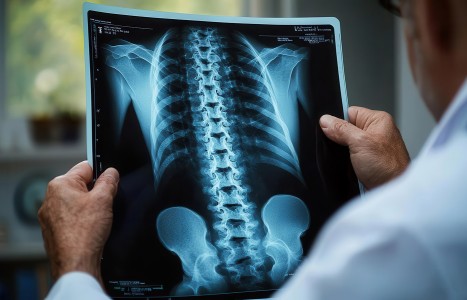
- Davis series of the cervical spine (seven-view radiographic study) to evaluate for cervical spine instability
- MRI of the cervical spine to evaluate for cord compression
Discussion
You probably have a few questions about this patient’s findings. How did I justify the diagnoses “late whiplash syndrome” and “post-traumatic chronic pain syndrome”? What is the evidence that supports the two diagnoses?
Dr. Pitcher clarifies the temporal issue that differentiates acute pain from chronic pain. In addition, he describes high-impact chronic pain.1 Pain that continues for more than three months qualifies as chronic pain.
Late whiplash syndrome with its centralization into the CNS is discussed by Moogc. The study discusses the biopsychosocial issues and allodynia that occur with this syndrome.2
Why did I suspect cervical cord compression and degenerative changes in the cervical spine and order imaging studies? Based upon my clinical expertise, I decided that a whiplashed patient who experiences somatosensory signs 15 years later had incurred enough trauma to sprain ligaments and strain muscles. These soft-tissue injuries would show degenerative changes in both the posterior and anterior joints (cervical facets and discs). I intended to rule in or rule out cervical spine instability and/or cervical cord compression.
If the imaging studies were negative for cord compression and instability, would I recommend high-velocity, low-amplitude cervical manipulation? The answer is no. Evidence-based practice and patient-centered care requires the chiropractic physician to gain informed consent from the patient. She expressly said that she did not want her neck adjusted. Hence, I have not gained informed consent.
What I would recommend for treatment based upon her clinical findings is gentle cervical distraction without manipulation and soft-tissue treatments to deactivate the myofascial trigger points and improve range of motion with reduction of the chronic pain.
As chiropractic physicians, we should provide evidence-based care for our patients. The three parts of this model of practice include use of the best available literature, clinical expertise, and respecting the patient’s wants and needs. Prior to examination, ask for permission to touch the patient and explain the process.
To gain informed consent we must explain at least three things to our patients: 1) the reasons for examination and treatment procedures; 2) the assessment / diagnoses; and 3) the outcomes of treatment, which include possible adverse reactions.
My final suggestion is that we properly document the evaluation and management process in the patient chart, which should improve quality of care and demonstrate medical necessity.
Question
If a patient expresses fear of cervical manipulation because of a negative response to previous chiropractic care, would you modify your treatment and avoid high-velocity, low-amplitude manipulation? I would appreciate any feedback: jlehman@bridgeport.edu.
References
1. Pitcher MH, et al. Prevalence and profile of high-impact chronic pain in the United States. J Pain, 2018 Aug 7;20(2):146-160.
2. Moogc M, et al. "The Late Whiplash Syndrome." Pain-education.com. Read Here