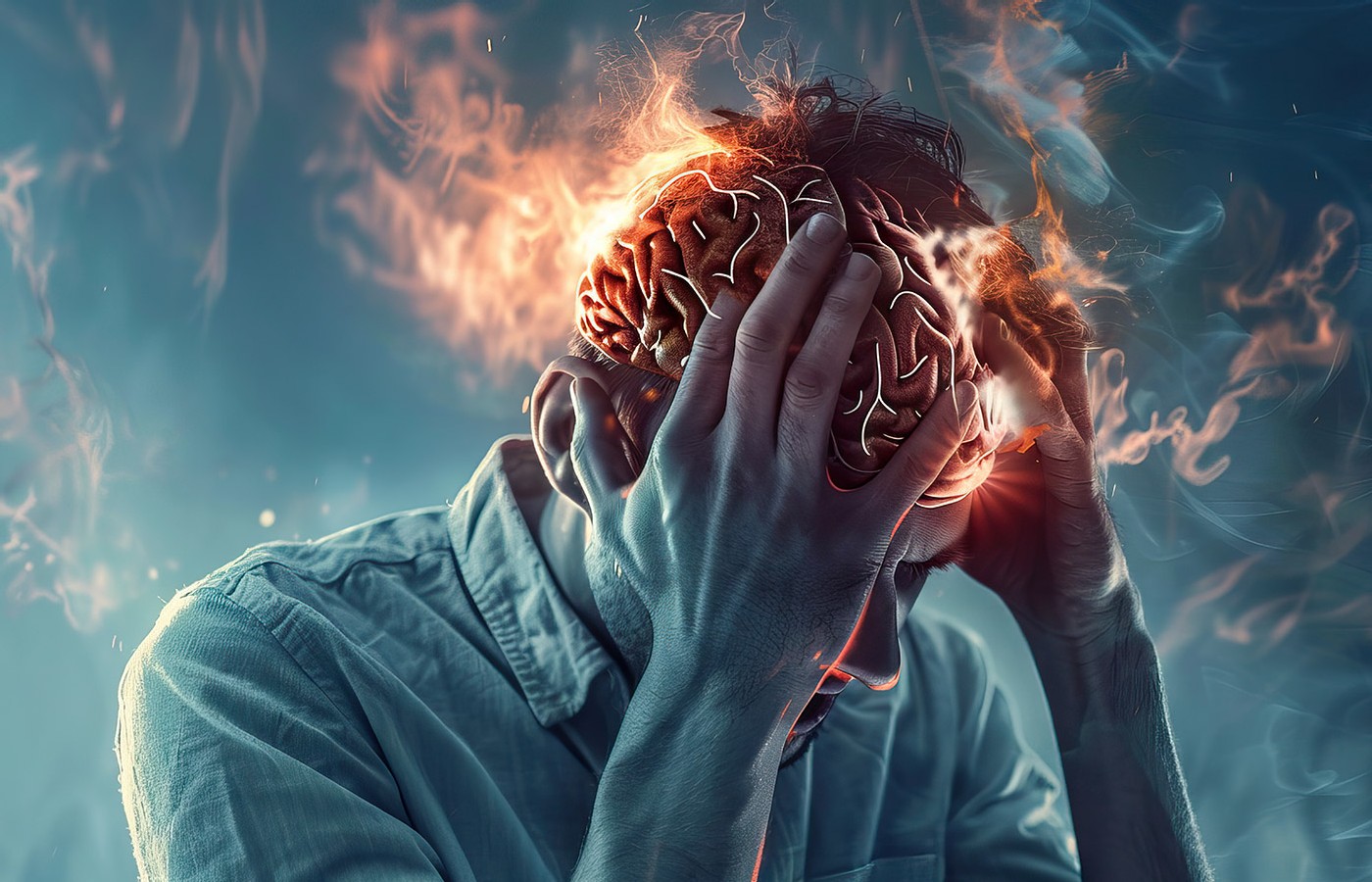
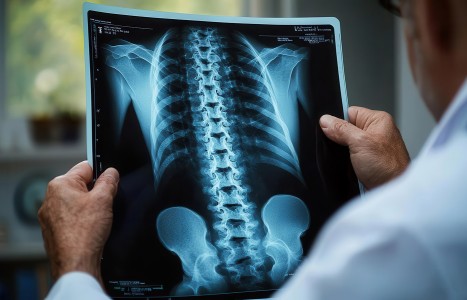
Author’s Note: Post-traumatic stress disorder (PTSD) can develop following a motor-vehicle accident when the patient had been earlier diagnosed with mTBI, acute stress disorder (ASD) or post-concussion syndrome (PCS), as discussed in my previous three installments [access here]. In this article (part 4), clinical criteria leading to the diagnosis of PCS are reviewed that may give insight into the evolving PTSD.
Post-concussion syndrome (PCS) is an mTBI that survivors of MVA can develop from blunt-force trauma to the brain as a result of direct impact with a component of the vehicle or another occupant in the same vehicle. Rapid rotational and/or linear acceleration or deceleration of the head and neck during the MVA can cause axonal shearing at the white and grey matter boundary.1-4
Intracranial bleeding disorders and diffuse axonal injury (DAI) (previously described) are the result of brain trauma. Diffuse axonal injury is the more prevalent objective finding associated with PCS. Post-concussion syndrome is a neuropsychological condition that can precede post-traumatic stress disorder (PTSD).1-4
An important differentiation is to note that not all head injuries produce brain injuries and not all brain injuries are the result of head injury. A patient may not develop TBI simply because there has been glass breakage in the vehicle that lacerated the forehead. Alternatively, in the case of rapid acceleration deceleration causing axonal injury, there may be no clinical observation of head or facial bleeding.5
PCS can be considered diagnostically after the initial two-week window allowed for a concussion to improve or even resolve. The initial concussion symptoms of headache, vertigo / dizziness, and drowsiness / fatigue may fail to resolve or even worsen though the first two weeks of recovery. An initial GCS (Glasgow Coma Scale – download here) rating of 13-15 may have been scored earlier following the MVA. A retest of the GCS may even show a one- to two-point drop on follow-up testing.5
The initial concussion may not even have been reported. Worsening symptoms may motivate the patient to seek medical care. The patient may have had EEG testing that may have indicated the concussion or even may have been unremarkable or inconclusive.5-18
Documentation of a concussion mTBI may represent an early indication of PTSD development. The Centers for Disease Control and Prevention (CDC) has made available the Acute Concussion Evaluation (ACE) as a download. The ACE provides the physician with a questionnaire and instruction for completion to document the concussion. Radiographic imaging or EEG testing is not always positive for concussion and therefore clinical confirmation is an important addition to the patient's documentation.19
Additional symptoms that are characteristic of PCS may develop including neck pain, photophobia, phonophobia, tinnitus, impaired memory, diminished concentration, forgetfulness or memory loss, impaired comprehension, insomnia, impaired logical thought or having difficulty with new or abstract concepts, apathy, irritability, anger outbursts, increased fatigue ability, depression, loss of libido, and mood swings. A history of loss of consciousness (LOC) may be reported.20-21
Unconsciously, affective and sensory experiences linked with the MVA may initiate the development of PTSD. Conscious encoding from frequent verbal review of accident details may produce “trauma memory “ that further progresses the PTSD.
Symptoms of MVA-related injury treatment can last for weeks to months. Strain and sprain injuries can remain symptomatic from five weeks to four months. Intervertebral disc injuries (IVD) remain symptomatic for 6-12 months with proper care and early diagnosis. The time spent recovering from these relatively common MVA injuries may serve to cause the patient to further consciously encode the accident by experiencing ongoing symptomatology. This combination of unconscious and conscious encoding lasting into the fourth week sets the stage for the developing PTSD.22-28
PTSD symptoms are grouped into four clusters. These include intrusion / re-experiencing, avoidance, negative alterations in cognition and mood, and increased arousal / reactivity. Within these four cluster groups are specific symptoms that coincide with PCS. There can be an overlap between PCS and PTSD symptoms. Hyperarousal, concentration problems, sleep disorders, fatigue, irritability, anger, poor concentration, disregulated arousal, hypervigilance, and memory deficits are shared symptoms. It has also been discovered that PTSD can exacerbate or worsen PCS; and conversely, PCS can prolong PTSD, as the two conditions commonly co-occur.22,29-30
As might be expected, the patient’s health-related quality of life (HRQoL) is reduced when the patient suffers from mTBI and/or PTSD. Most patients return to work six months after the injury. Patients often perceive a lower HRQoL when compared with those not experiencing these symptoms.30
Neuropsychological testing can have some predictive value of the developing condition. Post-concussion syndrome questionnaires provide important clinical documentation of the injury. Several questionnaires are available for clinical use that can offer documentation validity for your patient whom you feel is experiencing PCS.
- The Rivermead Post-Concussion Symptoms Questionnaire. The questionnaire is utilized to quantify the PCS symptoms. It is available for download here.
- The Post-Concussion Symptom Scaleb. This questionnaire identifies key symptoms that persist or develop with continued concussion symptoms that represent a higher likelihood of the discovery of DAI on MRI follow-up testing. Download here.
Optimally, interprofessional co-management for patients diagnosed with any neurophysiological or neuropsychological injury should be facilitated. Referral to psychotherapists and neurologists specializing in mTBI is recommended while treatment of the MVA physical injuries continues. Support of the patient’s emotional and psychosocial needs is critical for an effective outcome.
With early identification of the mTBI and PTSD patient, prompt treatment can begin that promotes the best possible patient outcome.
References
- Dave S, Tichauer M. “Seven Potentially Devastating Traumatic Brain Injuries.” Medscape, 09-05-2024.
- Mesfin F, Gupta N, Shapshak A, Margetis K. “Diffuse accidental injury.” Treasure Island, FLA: StatPearls Publishing, January 2025.
- Das J, Munakomi S. “Raccoon sign.” Treasure Island, FLA: StatPearls Publishing, January 2025.
- Cimino-Fiallos N. “Hard Hits: Blunt Force Trauma.” Medscape, 03-18-2025.
- Arciniegas D, Anderson C, Tookoff J, McAllister T. Mild traumatic brain injury: a neuropsychiatric approach to diagnosis, evaluation and treatment. Neuropsychiatric Disord Treatment, 2005 December;1(4):311-327.
- Low P. Clinical Autonomic Disorders. Philadelphia, PA: Lippincott-Raven Publishers, 1997: p. 421.
- Low P, Op Cit, pp. 238-239.
- Low P, Op Cit, p. 724.
- Jagoda AS, et al. Clinical policy: neuroimaging and decisionmaking in adult mild traumatic brain injury in the acute setting. Ann Emerg Med, 2008 Dec;52(6):714-48.
- Evans R. Neurology and Trauma. Oxford University Press, Inc., 2006: pp. 97-103.
- Evans R, Op Cit, p. 208.
- Kulkarni AR, et al. Ocular manifestations of head injury: a clinical study. Eye, 2005;19:1257-1263.
- Ross K. Ocular/Visual Injuries Within Athletes. Read Here
- Dalby BJ. Chiropractic diagnosis and treatment of closed head trauma. J Manipulative Physiol Ther, 1993 Jul-Aug;16(6):392-400.
- Foreman S, Croft C. Whiplash Injuries: Cervical Acceleration/Deceleration Syndrome, 3rd Edition. Philadelphia, PA: Lippincott Williams and Wilkins, 2002: pp. 160.
- Wang D, Wang L, et al. Relationship between type 2 diabetes and white matter hyperintensity: a systematic review. Front Endocrinol, 2020 Dec 21;11:595962.
- Ferry B, DeCastro A. “Concussion.” National Library of Medicine, Treasure Island, FLA: StatPearls Publishing, January 2025.
- Agarwal N, Thakker R. Khoi T. Concussion. American Association of Neurological Surgeons, April 29, 2024.
- Gioia G, Collins M. Acute Concussion Evaluation. CDC.gov: https://www.cdc.gov/heads-up/media/pdfs/providers/ace_v2-a.pdf.
- Evans R, Op Cit, pp. 95-100.
- Foreman S, Croft C, Op Cit, pp. 371-376.
- Vasterling J, Jacob S, Rasmussen A. Traumatic brain injury and posttraumatic stress disorder: conceptual, diagnostic, and therapeutic considerations in the context of co-occurrence. J Neuropsychiatry Clin Neurosci, 2018 Spring;30(2):91-100.
- Freeman MD, Croft AC, Rossignol AM. Whiplash associated disorders: redefining whiplash and its management by the Québec Task Force. A critical evaluation. Spine, 1998.May 1;23(9):1043-9.
- Diesel A, Mirsky H The Québec Task Force on Whiplash Associated Disorders and the British Columbia Whiplash Initiative: a study of insurance industry initiatives. Pain Res Manage, August 1999;4:141-149.
- Livingston M. Québec Task Force’s whiplash study. Spine, 1999 January 1;24(1):99-100.
- Summer HM. Québec Task Force’s scientific monograph on whiplash-associated disorders (WAD). Spine, 1997 April 15;22(8):928.
- Foreman S, Croft C. Whiplash Injuries: The Cervical Acceleration/Deceleration Syndrome; 2nd Edition. Philadelphia, PA: Lippincott Williams & Wilkins, 2002: pp. 332-339.
- Permar G. “Herniated Disc Recovery Time. How Long?” CrushBackPain.com, June 15, 2024.
- Larsen S, Vasterling J. Traumatic brain injury and PTSD. PTSD: National Center for PTSD.
- Van Vlegel M, Polander S, McCulloch A, et al. The association of post-concussion and post-traumatic stress disorder symptoms with health-related quality of life, health care use and return to work after mild traumatic brain injury. J Clin Med, 2021 June 2;10(11).