Lifegevity, the concept of squaring off the geriatric curve of aging, has been the recurring theme in this column lately because the declining health of our patients, friends and family is real. As doctors of chiropractic we are in a unique position to promote lifegevity since we care for the whole person from a vitalistic perspective. In addition, lifegevity follows a progression and algorithm of care for optimal outcomes.
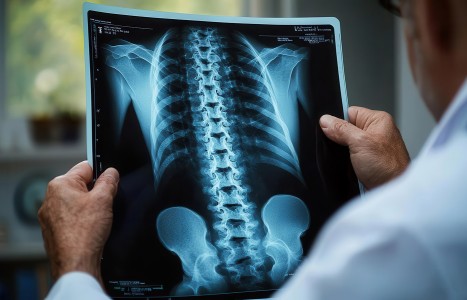
Gravity is not our friend. Structurally we collapse on ourselves due to genetics, injuries and lifestyle. The solution is postural correction from the feet up, which means the clinician must own postural assessment and corrective exercises for the entire body. It begins with teaching patients how to find and maintain sagittal plane alignment statically.
Next, it is essential to groove postural correction with dynamic activities for correction in everyday life. As a bare minimum take the seven exercises mentioned in my previous column [March issue] and be fastidious about your patients performing them in neutral spine and with optimal joint kinematics. Become the anti-gravity solution for your patients!
Relevant Tip: A simple and highly effective technique to strengthen patients in sagittal plane alignment is using a low-intensity vibration plate after their adjustments. Designed for the treatment of osteoporosis and sarcopenia, they vibrate at 0.3 -0.4Gs. Simply have your patients stand for 10 minutes after each adjustment in the auto-corrected posture you taught them; it will strengthen the patient in corrective, sagittal plane alignment. Note: This is low-intensity vibration.
The get-up-and-go test is the progression of the foundational sit-to-stand exercise. Both are needed for lifegevity. Starting seated, the patient gets up and walks three meters, turns around, walks back, and sits back down as fast as possible. This is a recognized functional assessment tool and the time for a single repetition is documented in the patient’s chart. This incorporates speed, agility and change of direction to a basic sit-to-stand exercise.
Relevant Tip: The “Grim Reaper” has been found to walk less than three miles/hr. Patients who can walk over three miles/hr for six minutes live longer. The get-up-and-go test, when applied as a corrective exercise, is integral for both longevity and lifegevity.
Continuing the progression of sitting, we enter the realm of the deep squat; yes, a primal squat. It is more than a mobility exercise that requires full ankle, knee and hip mobility. It is an exercise for strength and postural control since it requires neuromuscular control in the legs and posterior chain for a controlled descent and ascent to maintain postural alignment. The deep squat is both a corrective and rehabilitative exercise.
In developing the deep squat, deficiencies in both ROM and strength can be addressed. Begin by having the patient hold on to a rigid strap at waist level, with enough “pull” to allow them to be successful in the squat movement, both descent and ascent. Alignment of the lower extremity must be kept at all times and the tibia / torso lines need to be maintained parallel. ROM deficiencies will manifest as shifting out of alignment while muscular weakness allow alignment to be maintained only if the patient holds on forcefully. The goal is to progress the patient to be able to perform a full deep squat with good motor control and postural alignment without assistance.
Relevant Tip: Performing the deep squat with the feet hip-width apart is functional for tying shoes, washing feet and cutting toenails. Keep the feet hip-width apart and encourage lifegevity. Note: This is not a power sumo squat.
Agility training is essential in lifegevity for fall prevention. Begin by ensuring patients are picking their feet up while walking and utilizing a heel-toe gait. Next, variations of ladder drills are excellent to keep the feet from getting “tangled up” in ADLs. Place a strip of tape on the floor (or find a straight seam in the carpet or flooring) and have the patient step over and back in small, brisk steps, ensuring a pause between changing direction.
Lateral side steps in a ¼ squat position (ready stance in sports) are a favorite of mine, as they engage the gluteals and reinforce keeping the feet straight ahead while the body moves laterally. Short, staccato steps with a pause in between is the key.
Cardiovascular disease is the leading cause of mortality in the United States and 120 minutes of cardiovascular exercise/week can reduce that risk up eight times. It can be walking, cycling, swimming, running, or any combination of exercise that challenges the cardiorespiratory system. The heart, like all muscles, needs to be able to adapt efficiently to the demands placed on it, and that is developed by exercise. Additionally, heart health involves being able keep up with the demands of activity, as well as being able to recovery appropriately.
Relevant Tip: The PAR-Q is an assessment tool to help determine the readiness of a patient for cardiovascular exercise. It can be used alone or in conjunction with clearance from their cardiologist. Once cleared, progressive cardio is an important aspect of lifegevity.
The gold standard in cardiovascular fitness assessment is the modified Harvard step test. Have the patient step up and down on a 12-15” step at a tempo of 30 steps/minute for a maximum of five minutes. Once complete, they sit and their heart rate is taken for 30 seconds after one, two and three minutes. The maximum heart rate and recovery measurements are plotted against norms to determine overall fitness.
For lifegevity, simply stepping up and down on the bottom step at home for one minute several times daily can be effective cardio activity, too. Note: A deconditioned patient may need to start at a lower height step. Remember, successful completion with optimal alignment is the key with every lifegevity activity.
Relevant Tip: Personally, I start a deconditioned patient interested in beginning to exercise on low-intensity cardio first to simply get blood flowing and joints moving. Once they can do 30 minutes 4-6x/week at that level I introduce resistance training and short intervals (1-2 minutes) of higher-intensity cardio. From that point, strength, cardio intervals and flexibility are increased as tolerated.
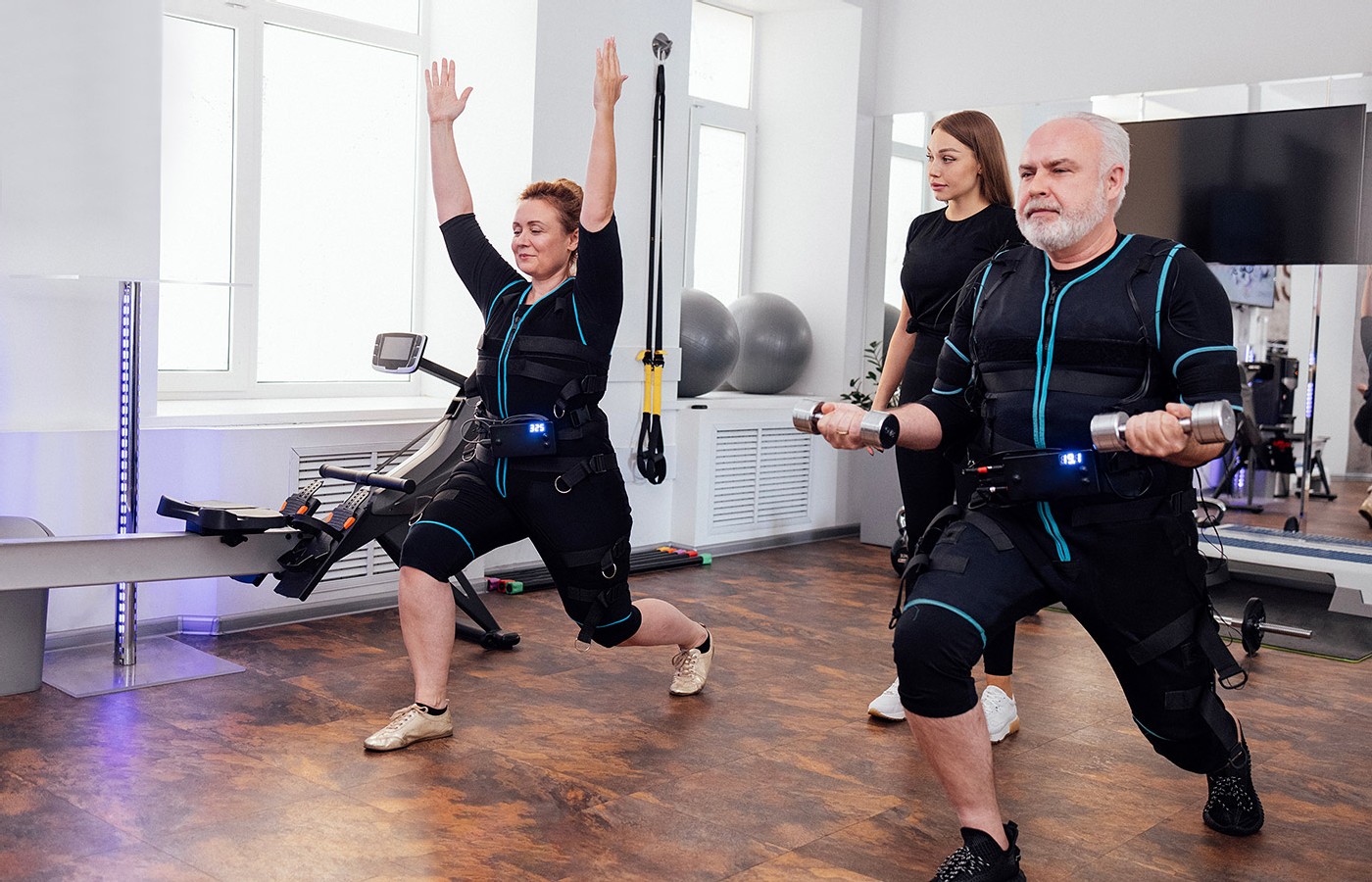
Resistance training is essential for lifegevity, as studies indicate even hand grip strength can ward off the effects of aging. Consider incorporating grip strength into global weight training and ADLs. Encourage the use of dumbbells and kettlebells with global strength training. Have patients consciously grip objects before they lift or carry. The simple everyday habit of grasping will maintain and develop grip strength.
In the previous article, I discussed wall angel exercises for postural control of the upper body, and they are excellent. Their progression is to add elastic resistance and to focus on the eccentric control of the mid and lower trapezius as the patient travels from the “W” position to the “Y” position. This is a biomechanical paradox. As the arms elevate overhead, the scapulae protract and elevate. Attempting to keep the scapulae in retraction and depression as the arms elevate will enhance mid- and lower-trap strength logarithmically.
Similar to all return-to-function activities, lifegevity activities mentioned here, as well as those that include playing musical instruments, learning a new language, and following an anti-inflammatory diet, all follow a progression. They create vast systemic changes beyond strength, flexibility and agility. They improve cardiovascular health, improve serum lipid levels, reduce insulin resistance, ward off depression, reduce adiposopathy, and simply improve quality of life. The benefits go beyond neuromuscular control and neuroplasticity.
Lifegevity is not a one-and-done special technique adjustment, but rather an ongoing process centered around a chiropractic lifestyle. Adult children taking care of aging parents and aging adults all desire and can relate to squaring off the geriatric curve. A chiropractic lifestyle is the solution.
Resources
- Bohannon RW. Grip strength: an indispensable biomarker for older adults. Clin Interv Aging, 2019 Oct 1;14:1681-1691.
- D’Onofrio G, Kirschner J, Prather H, et al. Musculoskeletal exercise: its role in promoting health and longevity. Prog Cardiovasc Dis, 2023 Mar-Apr;77:25-36.
- Izquierdo M, et al. Global consensus on optimal exercise recommendations for enhancing healthy longevity in older adults (ICFSR). J Nutr Hlth Aging, 2025;29(1):100401.
- Parmar D, Modh N. Study of physical fitness index using modified Harvard step test in relation with gender in physiotherapy students. IJSR, 2013;6:14.
- Thornton JS, Morley WM, Sinha SK. Move more, age well: prescribing physical activity for older adults, CMAJ, 2025;197:E59-67.
- Stanaway FF, Gnjidic D, Blyth FM, et al. How fast does the Grim Reaper walk? Receiver operating characteristics curve analysis in healthy men aged 70 and over. BMJ, 2011 Dec 15;343:d7679.