
Rebuilding the Gut Barrier:
Four Jobs, and the Nutrients That Support Them
The intestinal barrier is a single cell layer thick, yet it does two opposing jobs at once: absorbing nutrients while keeping toxins, microbes, and allergens out. When that barrier’s integrity falters and permeability rises, patients often present with the familiar cascade: food sensitivities, malabsorption, and lingering digestive complaints. For the practitioner, supporting that lining is foundational work.
Effective barrier support comes down to four jobs, each with nutrients that carry human evidence behind them.
Fuel and rebuild. Enterocytes are among the fastest-renewing cells in the body, and L-glutamine is their primary fuel. In a randomized, placebo-controlled trial, glutamine (5 g three times daily) normalized intestinal permeability and substantially reduced symptom scores in post-infectious digestive discomfort.1 N-acetyl glucosamine supplies building blocks for the protective mucosal layer that sits above the cells.
Protect. Zinc carnosine supports the mucosa and a healthy inflammatory response. In a human crossover trial, it helped prevent the roughly threefold rise in gut permeability that NSAIDs otherwise produced.2
Soothe and coat. Deglycyrrhizinated licorice (DGL), aloe vera, and okra calm and coat the lining. A 2025 phase III RCT found a standardized DGL extract improved reflux-related symptoms and quality of life versus placebo,3 and a meta-analysis reported aloe vera significantly helped symptom scores associated with functional GI discomfort with a good safety profile.4
Antioxidant defense. MSM contributes organic sulfur that supports glutathione and a healthy oxidative balance at the barrier.
The patient with a compromised, hyperpermeable barrier is, by definition, the one with the narrowest tolerance for non-therapeutic exposures, which argues for minimizing every excipient that does not contribute to barrier support. Emerging human data implicate certain dietary additives, including synthetic emulsifiers and non-nutritive sweeteners, in disruption of both the microbiota as well as a normal inflammatory response in the intestines; reserving the formulation for actives with mechanistic rationale only.5 That means leaving out the gums, sweeteners, flavors, and fillers that can themselves provoke a sensitive gut, and reserving the scoop for ingredients doing real work.
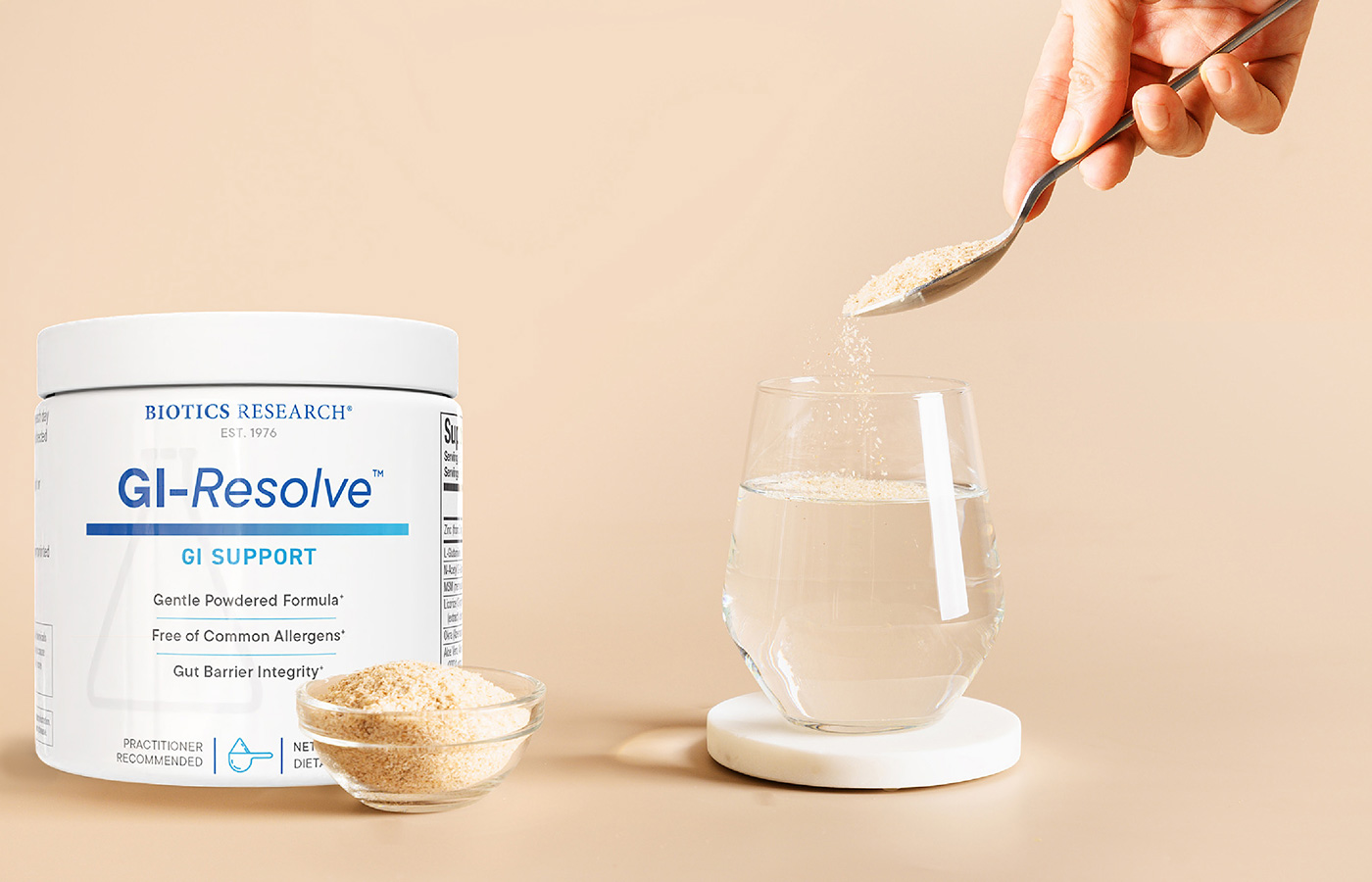
That’s the thinking behind GI-Resolve® from Biotics Research - seven purposeful ingredients at meaningful levels, and nothing else.
These statements have not been evaluated by the Food and Drug Administration. This product is not intended to diagnose, treat, cure, or prevent any disease.
|
At Biotics Research®, we combine the best of science and nature in order to develop supplements that are bioavailable, reliable and safe. This is done by passionately searching for holistic interventions and the highest quality raw material ingredients around the world. |
References
- Zhou Q, Verne ML, Fields JZ, et al. Randomised placebo-controlled trial of dietary glutamine supplements for postinfectious irritable bowel syndrome. Gut. 2019;68(6):996-1002.
- Mahmood A, FitzGerald AJ, Marchbank T, et al. Zinc carnosine, a health food supplement that stabilises small bowel integrity and stimulates gut repair processes. Gut. 2007;56(2):168-175.
- Raj JP, Saxena U, Belhekar MN, et al. Efficacy and safety of GutGard® in managing gastroesophageal reflux-related symptoms: a phase III, single-centre, double-blind, randomized placebo-controlled trial. Complement Med Res. 2025;32(1):26-36.
- Hong SW, Chun J, Park S, et al. Aloe vera is effective and safe in short-term treatment of irritable bowel syndrome: a systematic review and meta-analysis. J Neurogastroenterol Motil. 2018;24(4):528-535.
- Chassaing B, Compher C, Bonhomme B, et al. Randomized controlled-feeding study of dietary emulsifier carboxymethylcellulose reveals detrimental impacts on the gut microbiota and metabolome. Gastroenterology. 2022;162(3):743-756.