
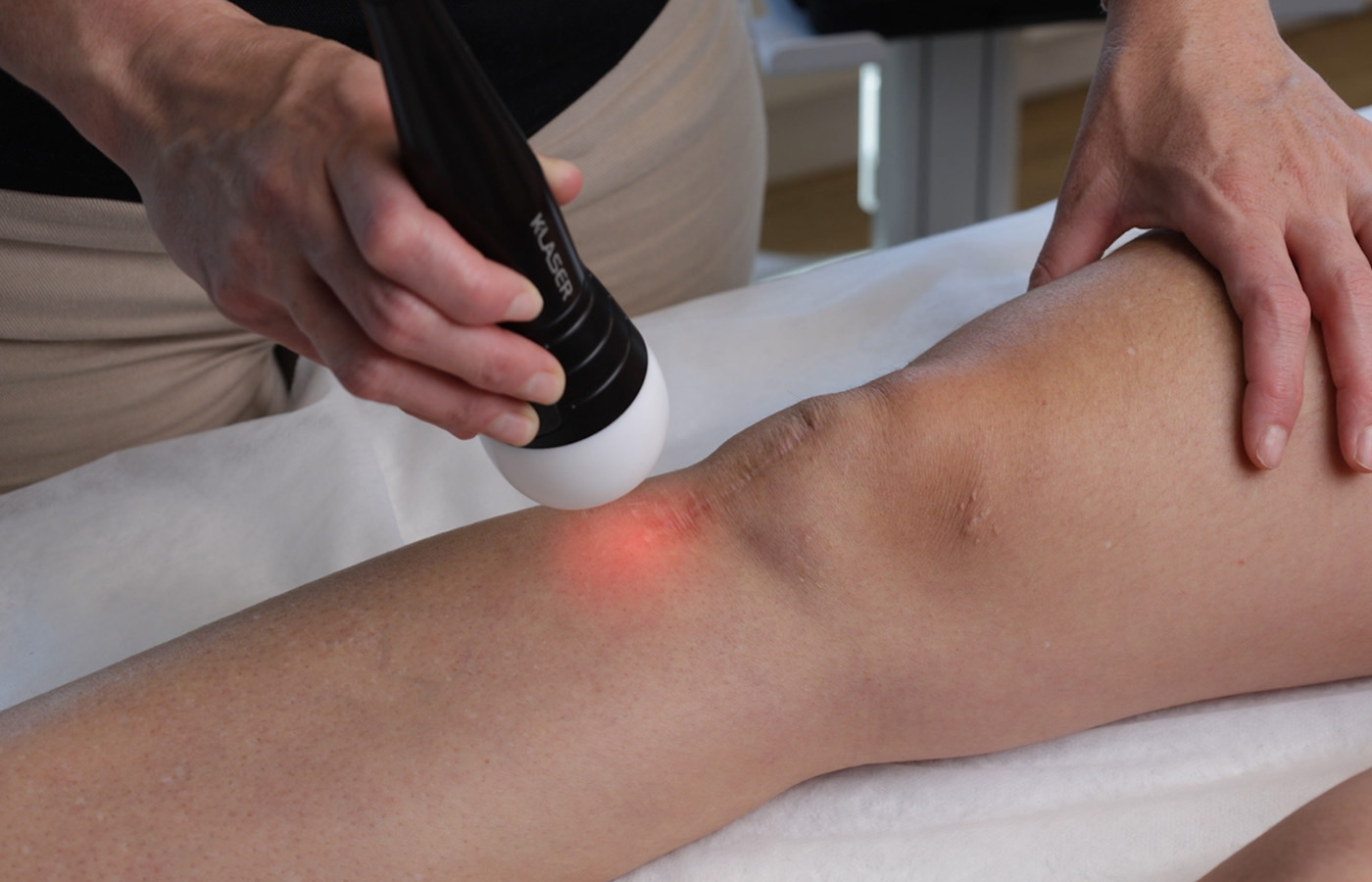
How Multi-Wavelength Laser Therapy Is Changing Patient Care
For many chiropractors, laser therapy has become an important tool for helping patients manage pain, improve function, and support tissue healing. As laser technology continues to evolve, however, the conversation is shifting away from a simple question of power and toward a more important one: how effectively are we delivering therapeutic light to the target tissue?
Research in photobiomodulation demonstrates that treatment outcomes depend on far more than wattage alone. Wavelength selection, pulse modulation, tissue penetration, and precise dosimetry all play critical roles in determining how cells respond to laser therapy. In fact, studies have shown that different wavelengths interact with tissue in unique ways, producing distinct biological effects that influence healing, circulation, pain modulation, and cellular activity.1-5
This is particularly relevant in chiropractic practice, where clinicians routinely encounter complex musculoskeletal conditions involving multiple tissue layers. A patient with chronic low back pain, for example, may present with inflammation, muscular dysfunction, neural irritation, and joint restriction simultaneously. Treating these conditions effectively often requires reaching both superficial and deep tissues while supporting multiple physiological processes at once.
Research suggests that no single wavelength can optimally address every clinical objective. Wavelengths in the 660nm range have demonstrated benefits for superficial tissue repair, collagen production, and wound healing.3 The 800–808nm range has been associated with mitochondrial stimulation, ATP production, and deeper tissue penetration.1,4,5 Wavelengths such as 905nm support neural modulation and analgesia, while 970–980nm wavelengths may enhance circulation and tissue perfusion.1,7,8 The 1064nm wavelength has demonstrated significant benefits for chronic musculoskeletal conditions, pain reduction, and range-of-motion improvements due to its ability to penetrate deeper tissue structures.7,9
For chiropractors, this growing body of evidence highlights the value of multi-wavelength therapy platforms. By combining multiple therapeutic wavelengths into a single treatment, clinicians can simultaneously address superficial, intermediate, and deep tissues while targeting several biological pathways at once. Research and photon transport modeling suggest this integrated approach can produce synergistic effects that are not achievable with single-wavelength systems alone.5,6,8
Beyond clinical versatility, modern laser systems are helping address another challenge facing today's practices: efficiency. As patient volumes increase and treatment expectations continue to rise, chiropractors need technologies that support consistent outcomes while fitting seamlessly into busy workflows. Intelligent treatment protocols, automated dosimetry, and condition-specific presets help reduce variability while simplifying treatment delivery.1,2
This evolution in laser therapy is reflected in K-Laser GIRO. Built on K-Laser's 25-year legacy in Class IV laser therapy, GIRO combines up to five therapeutic wavelengths, intelligent treatment delivery, and high sustained power in a single platform. The result is a system designed to help chiropractors treat efficiently, support better patient outcomes, and expand clinical applications across acute injuries, chronic pain, rehabilitation, and performance-focused care.
As laser therapy continues to advance, the future will belong to technologies that deliver more than power alone. Precision. Versatility. Clinical efficiency. These are the factors helping define the next generation of patient care.
References
- Zein R, Selting W, Hamblin MR. Review of light parameters and photobiomodulation efficacy. Journal of Biomedical Optics. 2018.
- Huang YY, et al. Biphasic dose response in low level light therapy. Dose-Response. 2009.
- Fuchs C, et al. Photobiomodulation response from 660 nm is different and more durable than that from 980 nm. Lasers in Surgery and Medicine. 2021.
- Hudson DE, et al. Penetration of laser light at 808 and 980 nm in bovine tissue samples. Photomedicine and Laser Surgery. 2013.
- Jacques SL. Tutorial on Monte Carlo simulation of photon transport in biological tissues. Biomedical Optics Express. 2023.
- Correa L, et al. Photobiomodulation in the parotid and submandibular glands: a Monte Carlo simulation. Lasers in Medical Science. 2025.
- Kaub L, et al. Comparison of the penetration depth of 905 nm and 1064 nm laser light. Biomedicines. 2023.
- Piao D, et al. Transcutaneous transmission of light of photobiomodulation therapy wavelengths. Photonics. 2024.
- Penberthy WT, et al. Utilization of the 1064 nm wavelength in photobiomodulation: a systematic review and meta-analysis. Journal of Lasers in Medical Sciences. 2021.