

What Gait Speed May Reveal About Your Patients' Longevity
As the population continues to age, chiropractors are increasingly positioned to help patients maintain mobility, independence, and quality of life.
Recent research has identified shortened stride length and declining gait speed as important predictors of physical disability, falls, and mortality in older adults, shifting gait analysis from a simple movement observation to a valuable insight into long-term health outcomes.1
Beyond mobility alone, regular walking has also been associated with improved cardiovascular health, better blood sugar regulation, reduced arthritic pain, and lower risk for several forms of cancer. Walking may also support cognitive health, with research suggesting regular walking can improve memory, strengthen brain connectivity and help reduce dementia risk in older adults.2
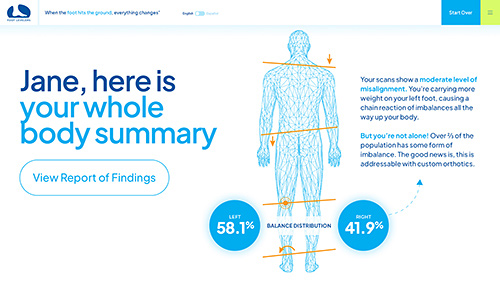 Postural distortions and asymmetrical movement patterns throughout the kinetic chain can contribute to compensatory gait changes over time. In many cases, patients adapt by shortening stride length and reducing stability in an effort to maintain balance and protect against discomfort or dysfunction.
Research also suggests that balance decline may be influenced by changes in sensory feedback and neuromuscular efficiency originating from the feet and lower extremities. Some studies have shown that custom orthotics may positively influence sensorimotor integration and balance, highlighting the importance of evaluating posture, gait mechanics and lower-extremity function as part of a comprehensive chiropractic approach.3
Modern gait and posture assessment technology, including tools such as the Posture Check 3D®, can help chiropractors better educate patients about these changes and demonstrate how movement patterns may affect long-term function and mobility.
By identifying gait abnormalities earlier and supporting better movement patterns, chiropractors can play an important role in helping aging patients remain active, stable and independent.
Download the Walking & Longevity White Paper
- Bytyçi I, Henein MY. Stride Length Predicts Adverse Clinical Events in Older Adults: A Systematic Review and Meta-Analysis. J Clin Med. 2021;10(12):2670. doi:10.3390/jcm10122670
- Smith JC, et al. Exercise Training Improves Brain Network Connectivity and Memory in Older Adults With Mild Cognitive Impairment. Journal of Alzheimer's Disease Reports. 2023.
- Effect of an Orthotic Intervention on Sensorimotor Integration Mechanisms in Patients With Musculoskeletal Disorders. Clinical Chiropractic. 2006;9:59-69. doi:10.1016/j.clch.2005.11.001