
Laser Therapy for Neuropathic Pain:
Expanding Treatment Options in the Chiropractic Practice
By Cutting Edge Laser Technologies
Resulting from somatosensory nervous system damage or dysfunction, neuropathic pain is often marked by uncertain etiology, poor response to conventional care, burning pain, paresthesia, numbness, allodynia, and hypersensitivity.
Pharmacologic therapy remains common, despite meaningful relief in only approximately 30% of patients.1,2 Limited efficacy and adverse effects have increased demand for non-pharmacologic adjuncts. Chiropractic care can address biomechanical nerve irritation; however, manual therapy alone may not fully address the cellular, inflammatory, and neurophysiologic dysfunction driving neuropathic pain.
Laser therapy, or Photobiomodulation Therapy (PBMT) has emerged as an evidence-based adjunct with anti-inflammatory, analgesic, and regenerative effects.
Laser Therapy for Neuropathic Pain
PBMT uses specific wavelengths of infrared light to transfer photonic energy to tissue, stimulating cellular metabolism and endogenous repair.
Cellular Metabolism
PBMT increases adenosine triphosphate (ATP), improving mitochondrial function and tissue repair.1 Increased ATP initiates biologic responses associated with reduced pain, inflammation, and edema. In vitro studies also show PBMT increases NLRP10, which inhibits pro-inflammatory interleukin production.1,2 Reduced inflammation leads to vascular normalization and decreased edema.2
Anti-Inflammatory and Analgesic Effects
Perineural inflammation contributes to neuropathic pain development and progression.2 PBMT anti inflammatory effects are clinically significant. It also produces analgesic effects by influencing anti-nociceptive mediators and modulates peripheral nerve conduction and nociceptive transmission providing short and long term pain relief.1
Effects on Nerves
PBMT has demonstrated regenerative potential. Injured-nerve studies report improved nerve function and increased axonal growth,2 suggesting a role in nerve recovery rather than pain masking alone.
Technological Advancements in Laser Therapy
Backed by 40 years of research and development, the Multiwave Locked System® (MLS) is a Class IV therapy laser that precisely synchronizes continuous 808 nm and pulsed 905 nm infrared wavelengths.
In vivo research indicates synchronized emission produces a biological response not achieved by either emission independently.3 The patented MLS system modulates output by treatment parameters, supporting precise dosing while reducing thermal risk associated with high-power laser systems.
Comparative studies have found that MLS Lasers achieve therapeutic results for musculoskeletal conditions in fewer sessions.4 Synchronized MLS pulse patterns have also shown faster recovery of nerve function and muscle trophism than traditional emissions.3
Designed for Neuropathic Pain
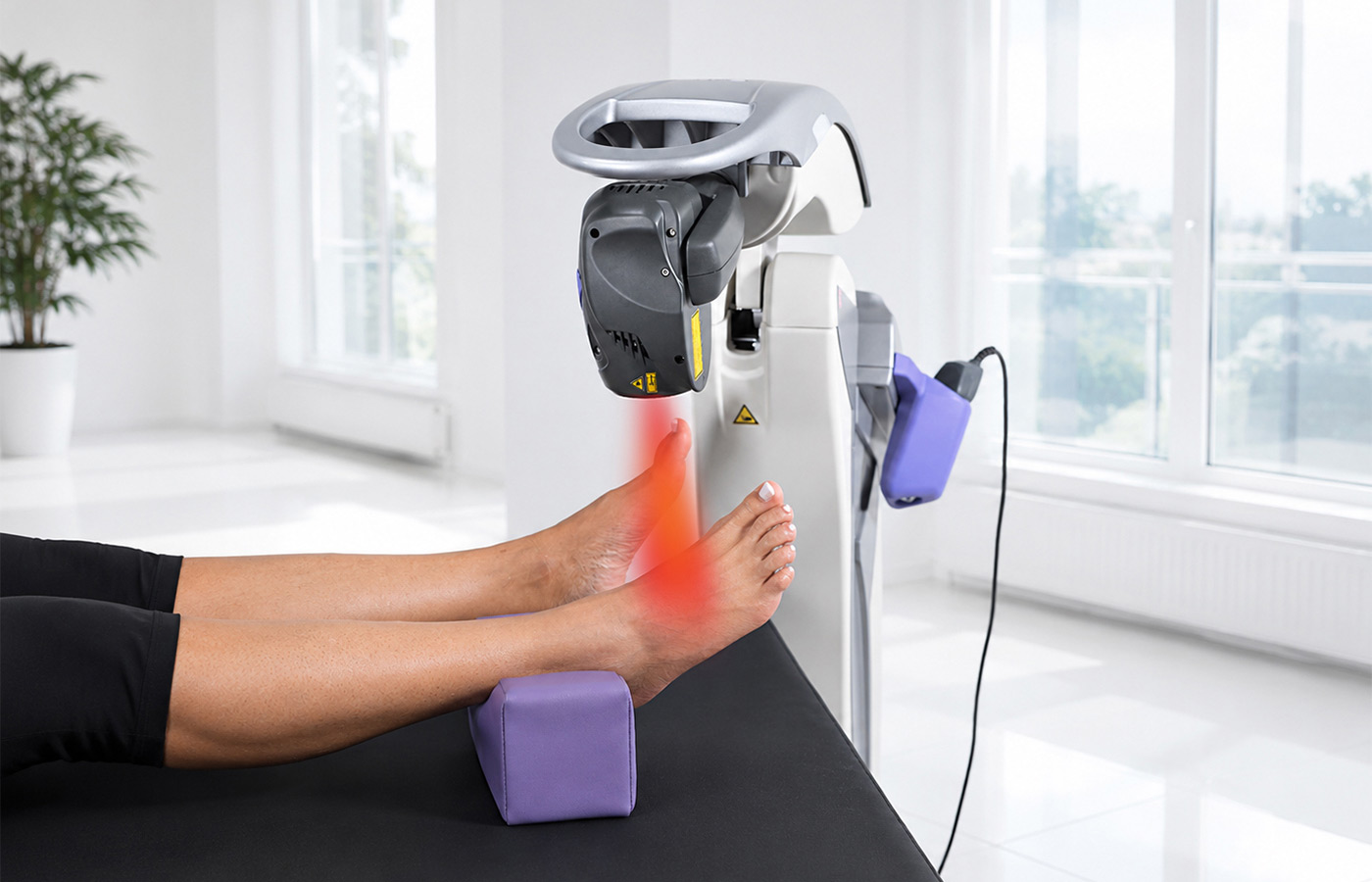
The MiS Therapy Laser advances MLS technology by combining synchronized MLS emissions with high-peak-power pulses for neuropathic pain.
With up to 1,000 watts of peak power, MiS increases energy delivery at maximum tissue penetration depth, optimizing biologic effects on nerve cells. The MLS pulse pattern enables high peak power while maintaining tissue temperatures below the thermal damage threshold.
MiS Laser Therapy supports pain, inflammation, and edema management, along with functional and structural nerve recovery through:
- Restoration of the myelin sheath surrounding nerve axons.1
- Stimulation of HNRNP K protein synthesis, supporting axonogenesis and nerve fiber repair.5
- Increased M2 macrophage activity, promoting anti-inflammatory signaling and tissue regeneration.6
By targeting cellular drivers of neuropathic pain, MiS offers therapeutic effects not typically achieved with conventional therapy laser systems.
New Opportunities for Chiropractors
Neuropathic pain remains challenging for patients and practitioners. Laser therapy gives chiropractors a clinically validated adjunct for drug-free care.
By addressing cellular metabolism, inflammation, nociceptive signaling, and neurophysiologic dysfunction, PBMT offers benefits beyond manual therapy alone, enhance patient outcomes and overall standard of care.
Sources
- Micheli, L., Cialdai, F., Pacini, A. et al. Effect of NIR laser therapy by MLS-MiS source against neuropathic pain in rats: in vivo and ex vivo analysis. Sci Rep 9, 9297 (2019). https://doi.org/10.1038/s41598-019-45469-5
- Mezzalira, M., and D’Angelo, D. Laser therapy in the management of neuropathic pain: preliminary experience on 43 patients. Energy for Health 19 (2019).
- Gigo-Benato, D., Geuna, S., de Castro Rodrigues, A., Tos, P., Fornaro, M., Boux, E., Battiston, B., & Giacobini-Robecchi, M. G. Low-power laser biostimulation enhances nerve repair after end-to-side neurorrhaphy: a double-blind randomized study in the rat median nerve model. Lasers Med Sci 19,1 (2004). https://doi.org/10.1007/s10103-004-0300-3
- Monici, M., Cialdai, F., and Paoli, P., Effect of IR laser on myoblasts: a proteomic study. Molecular BioSystems 9,6 (2013). https://doi.org/10.1039/c2mb25398d
- Kimlickova, M., Efremova, Y., Blaskova, E., Navratil, V., and Navratil, L. A comparison of effects of therapy with the NIR laser diode and MLS laser system. Energy for Health 15 (2016).
- Svobodova, B., Kloudova, A., Ruzicka, J. et al. The effect of 808 nm and 905 nm wavelength light on recovery after spinal cord injury. Sci Rep 9, 7660 (2019). https://doi.org/10.1038/s41598-019-44141-2