

When Structural Support Enhances Chiropractic Outcomes
Many chiropractors have experience with patients who struggle to maintain their corrections between visits.
While multiple factors can contribute, one structural factor that may influence long-term stability is the foundation. The feet influence the entire kinetic chain, and instability at ground level contributes to recurring stress patterns that affect pelvic alignment and spinal balance.
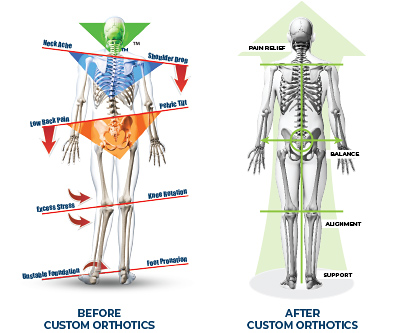
Research demonstrates that custom foot orthotics can positively influence lower-extremity biomechanics by reducing compensatory motion and redistributing forces during gait.1 Addressing excessive pronation and structural imbalance helps reinforce the stability of spinal corrections over time.2 A randomized clinical trial also found that custom orthotics, when combined with chiropractic care, significantly reduced chronic low back pain and improved function.3
Some doctors question whether adding custom structural support will interrupt office flow or add complexity to patient care due to concerns about workflow disruption or added complexity. In reality, modern assessment tools and streamlined ordering systems allow custom structural support to fit naturally into every care model, providing informative metrics and patient reports of findings.
For doctors seeking to improve patient stability, enhance practice performance and strengthen long-term outcomes, without overhauling operations, evaluating and supporting the foundation may be a strategic next step in promoting whole-body stability.
Foot Levelers partners with chiropractors to make structural support simple to implement, clinically grounded, and supported with education every step of the way.
References
- Collins N, et al. Foot orthoses in lower limb overuse conditions: a systematic review and meta-analysis. Br J Sports Med. 2007.
- Nigg BM, et al. The role of foot orthoses in the treatment of lower extremity injuries. Sports Med. 1999.
- Cambron JA, et al. Shoe orthotics for the treatment of chronic low back pain: a randomized controlled trial. Arch Phys Med Rehabil. 2006. https://www.archives-pmr.org/article/S0003-9993(17)30262-9/pdf
Learn How You Can Easily Integrate Custom Orthotics into Your Practice