

This case involves a 59-year-old single white female who is currently retired but worked many years as a nurses' aide, and as a clerk in a big box retail store. Her past medical history is significant with cervical fusion in 2017. She takes Metformin for type two diabetes, and has chronic Lyme's disease which she said "is currently asleep”. She also complains of "bad knees" that hurt on standing and walking.
In 2017 after her fusion surgery, she was hit over the head by an unruly customer at the above-mentioned big box store. The injury caused a concussion, and she had to have memory therapy. She had her cervical fusions checked by the orthopedic surgeon who said they were not damaged. She had physical therapy as well.
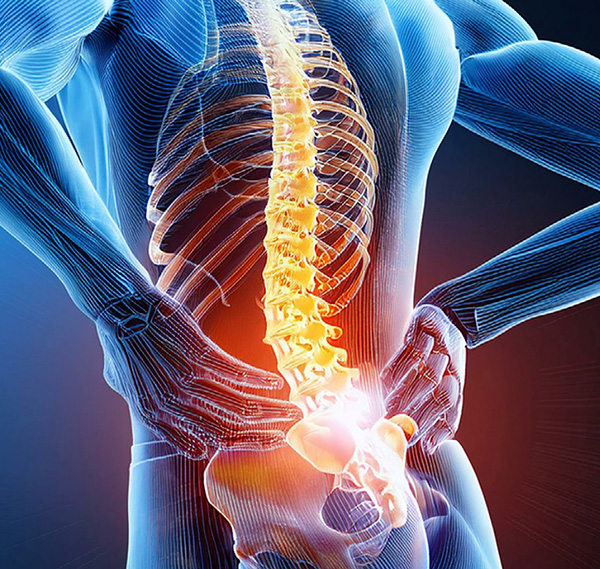
She stated that ever since this injury, she had chronic low back pain on the left and right, that can shoot into both buttocks and go all the way down her legs. She had been through various interventions for this including medical evaluations, physical therapy, home stretches, ice and moist heat applications, and epidural injections but nothing would alleviate her symptoms.
There were a few times she had to go to the emergency room when the pain got so bad and was told not to come back for this as there was nothing more they could do. Two weeks prior to coming to my office she had another orthopedic evaluation by an orthopedic back surgeon who said there was nothing he could do but pain management. She said that her latest MRI showed "a little stenosis".
Upon examination, she was alert, cooperative, well groomed, pleasant, and in no obvious distress or antalgic. There was no visible swelling or skin color changes in the area of her chief complaint. She had a low back disability index of 64 and her pain varied from a 6 out of 10 at best up to a 10 out of 10 at times. She was taking two Aleve tablets a day, but said they did not do much. There were no positive orthopedic tests.
Her height was 4'11", and her weight was 167 pounds. She had reasonably good active lumbar range of motion with ache and stiffness in all ranges, but no real increase in pain. There was moderate diffuse tenderness across the low back and glutes, and no joint dysfunction was palpated.
Her Foot Levelers scan showed a pronation index of 140 with her left arch dropping more than her right. We did an extracorporeal shockwave evaluation using a PiezoWave2 shockwave unit with a 20 mm flat spacer to patient tolerance which demonstrated a lot of muscular dysfunction across the low back, glutes, and hips. This evaluation also duplicated her referred leg pains.
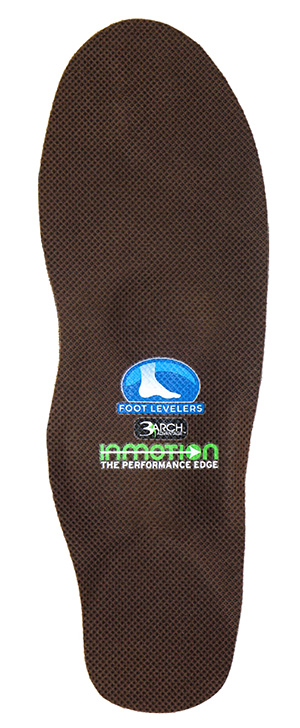
My initial diagnosis on this patient was chronic low back pain with a myofascial pain syndrome, aggravated by knee pain, and loss of proper arch support due to overpronation issues. A treatment plan began involving fitting her with Foot Levelers Inmotion custom orthotics and treating her weekly with extracorporeal shockwave therapy. She also had been and continued to do home exercises she was given from the physical therapist.
After six treatments the patient stated that she had not felt this good in a long time. Except for some knee ache she had no more shooting pains and was sleeping much better. She felt the custom orthotics were helping her to walk better.
Her low back disability index dropped to 10 with a numeric pain scale of 0 out of 10 for low back pain. She was discharged from care as maximum medical improvement had been achieved and encouraged to continue home exercises and wear her orthotics.
Chronic low back can be challenging because the real issue is to determine what is actually causing the pain. It is estimated that chronic low back pain affects about 28% of the US population with cost estimates of about 100 billion dollars per year.
Addressing the structure/function relationship between the lower kinetic chain through the arches of the feet combined with the targeted regenerative effects of extracorporeal shockwave therapy provided significant quick and cost-effective results in this particular case after most traditional medical interventions had failed leaving the patient with only pain management options. This type of analysis and treatment on a broader scale for chronic low back pain warrants further study.
- Fatoye F, Gebrye T, Mbada CE, et alClinical and economic burden of low back pain in low- and middle-income countries: a systematic reviewBMJ Open 2023;13:e064119. doi: 10.1136/bmjopen-2022-064119.
- Chen L, Ye L, Liu H, Yang P, Yang B. Extracorporeal Shock Wave Therapy for the Treatment of Osteoarthritis: A Systematic Review and Meta-Analysis. Biomed Res Int. 2020 Mar 18;2020:1907821. doi: 10.1155/2020/1907821. PMID: 32309424; PMCID: PMC7104126.
- Lee S, Lee D, Park J. Effects of extracorporeal shockwave therapy on patients with chronic low back pain and their dynamic balance ability. J Phys Ther Sci. 2014 Jan;26(1):7-10. doi: 10.1589/jpts.26.7. Epub 2014 Feb 6. PMID: 24567665; PMCID: PMC3927045.