

Patient History
The patient is a 44-year-old male who presented with lower cervical, upper/mid-thoracic, and left posterior rib 1-5 pain. The patient indicated that his job as an X-ray tech involved using his arms and upper body to position patients for 8-hour shifts. He would get short breaks here and there but he works in a busy hospital so there is little downtime.
Over the last 3 months, he has received Chiropractic spinal adjustments, massage, and moist heat therapy but his pain has been persistent, and the effects of treatment last only a few days. He was referred to my clinic to see if there were any other ideas to help him stabilize and stay out of pain for longer.
Initial Exam Findings
His review of systems, lifestyle habits, and family history were insignificant. He indicated under his lifestyle history that he was a mild to moderate drinker (2-4 drinks per week). His past medical history pertained only to the chronic nature of his neck, upper/mid back, and rib pain that he has had for the last few years off and on. The pain has been more noticeable and getting worse over the last 6 months.
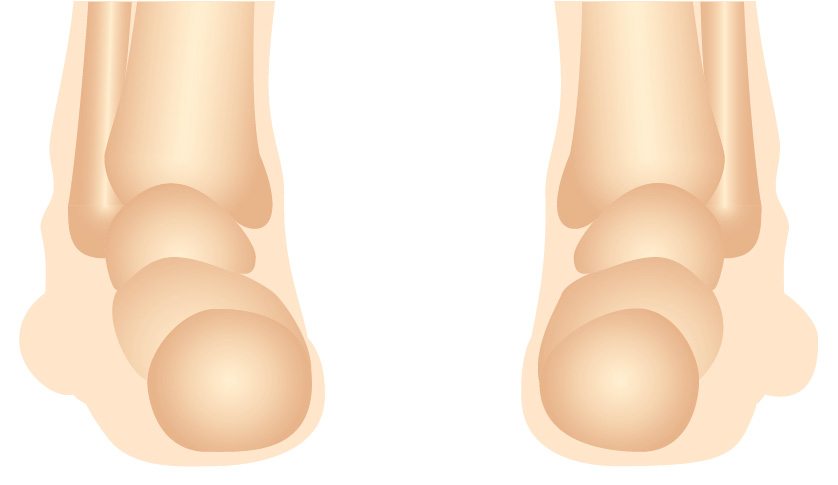
The patient has moderate, frequent to constant, dull achy pain located in the lower cervical, upper/mid thoracic area, and ribs 1-6 bilaterally. The pain becomes sharp and stabbing upon turning the head to either side, looking down, reaching with the arms, carrying objects, using the shoulders repeatedly, bending and leaning forward. The patient is 6'1", 150 lbs., BP: 110/70, Heart rate: 70 bpm, neck disability index score: 40. His pain in the aforementioned areas was a 7-8/10 and has been particularly bad for the last two days. Posture examination revealed severely pronated feet with the left being flatter than the right. The left hip and pelvis were tilted lower and the left shoulder was higher. A mild levoscoliosis as noted in the lumbar spine and mild dextro scoliosis in the thoracic spine.
Range of motion indicated 30-35% reductions in all ranges of motion for the cervical and thoracic spine. The lower cervical and thoracic paraspinal, rhomboid, middle/lower trapezius and upper intercostal muscles were moderately hypertonic. Mild to minimal swelling was present in the lower cervical, and upper/mid thoracic areas. Soto Hall, shoulder depression, and cervical compression tests reproduced localized pain in the lower cervical, and upper thoracic region. C4-T7 were all moderately tender to palpation.
Clinical Impressions
The patient had a history of getting manual Chiropractic adjustments in the C/T region but they were not holding. He was admittedly not consistent with his stretching and strengthening exercises for the neck, shoulders, and thoracic area so that was also a factor. He is an otherwise healthy individual so looking downwards at his body's foundation is important.
Although the patient's feet and lower body were not reportedly in pain, his severely high pronation index score (187) on the Posture Check 3D foot scanner quantified and illustrated how classic kinetic chain stress starting from the ground can create stress and symptoms to the thoracic spine and neck. If we combine this with his moderate Tech Neck Index Score (135), we see that stress, pain, and range of motion limitations on his upper body can negatively affect his presenting symptoms.
Treatment Plan/Methodology
- Physiotherapy modalities: class IV laser therapy, continuous, 900 Hz, 10 minutes.
- Chiropractic adjustments to the lower cervical, upper/mid-thoracic, and costotransverse rib joints 1-5. Stretching/strengthening exercises for the lower neck, and upper/mid thoracic regions.
- Custom-made, 3-arch, flexible foot orthotics
Results
The patient currently is at a 2/10 pain scale and his neck disability index is now at 12. His symptoms have improved significantly. His ranges of motion for the cervical and thoracic spine are limited by 5-10%, The Soto Hall test, shoulder depression, and cervical compression tests are no longer positive. Minimal to mild tenderness to palpation with no swelling present.
He is wearing his orthotics every day and has been since he received them. He is still inconsistent with his stretching and strengthening exercises because he has been feeling so much better. The patient is grateful to be out of the severe pain he had but he is also pleasantly surprised at how much he likes wearing his custom orthotics. He said, “I love these orthotics and I never knew how much I needed them".
It is important to note that most people have mildly, moderately, or severely flat feet (over-pronated). Addressing their pronation with custom orthotics not only helps support their body's foundation, but it supports the whole kinetic chain from toes to nose.
References
- Hylton B. Menz, Alyssa B. Dufour, Jody L. Riskowski, Howard J. Hillstrom, Marian T. Hannan, Foot posture, foot function and low back pain: the Framingham Foot Study, Rheumatology, Volume 52, Issue 12, December 2013, Pages 2275–2282, https://doi.org/10.1093/rheumatology/ket298
- Almutairi AF, BaniMustafa A, Bin Saidan T, Alhizam S, Salam M. The Prevalence and Factors Associated with Low Back Pain Among People with Flat Feet. Int J Gen Med. 2021 Jul 20;14:3677-3685. doi: 10.2147/IJGM.S321653. PMID: 34321913; PMCID: PMC8312604.
- Raj MA, Tafti D, Kiel J. Pes Planus. [Updated 2023 May 23]. In: StatPearls [Internet]. Treasure Island (FL): StatPearls Publishing; 2025 Jan-. Available from: https://www.ncbi.nlm.nih.gov/books/NBK430802/
- Souza TA. Differential diagnosis for the chiropractor. Gaithersburg: Aspen Pubs, 1998:326
- Magee DJ. Orthopedic physical assessment. 2nd ed. Philadelphia: WB Saunders, 1992:459.
- Cambron, J. A., Dexheimer, J. M., Duarte, M, & Freels, Shoe Orthotics for the Treatment of Chronic Low Back Pain: A Randomized Controlled Trial. The Archives of Physical Medicine